
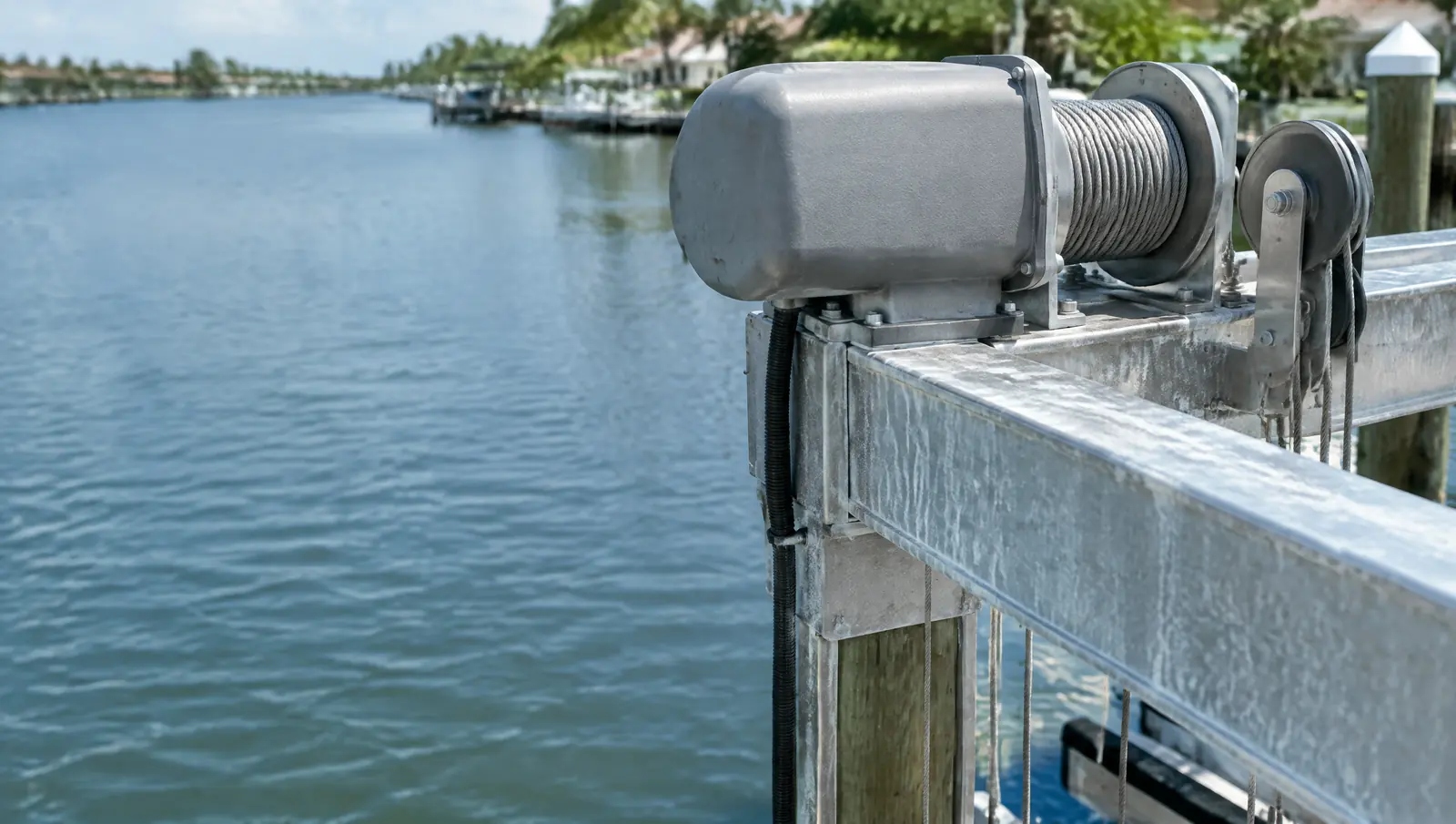
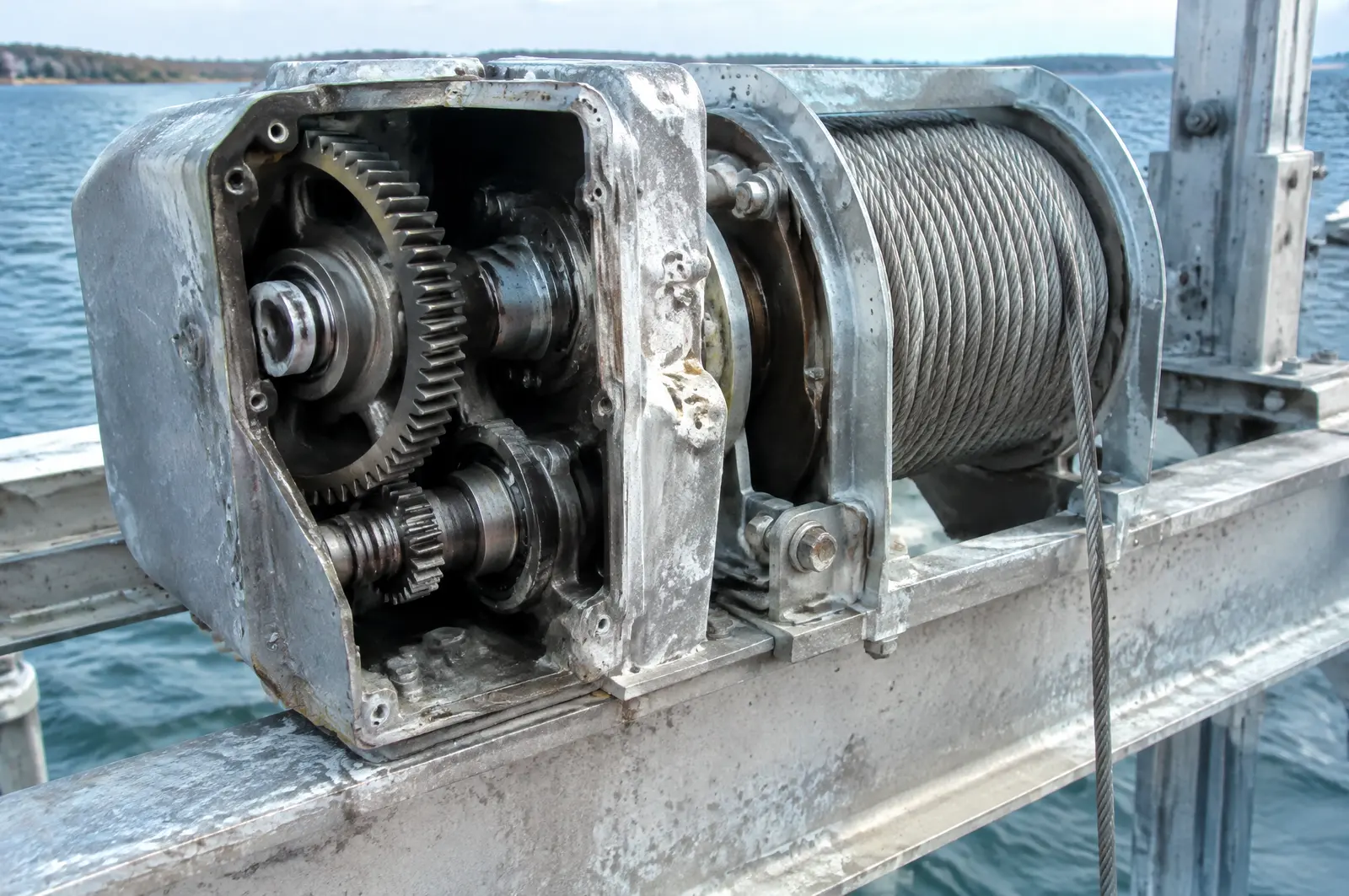
Boat lift motors and cables in Miami Beach
Boat lift motors and cables in Miami Beach, where the tide swings 2.70 ft at Government Cut.
Free Fast Quote
Please fill out this form to request a free quote on your upcoming project and we will respond to you right away!
We replace worn cables, motors, gearboxes, pulleys and switches with marine-rated parts, and set the cables to even tension.
- Free, no-obligation quote
- Fast response from our team
- Miami-Dade, Broward, Palm Beach and the Keys
The short answer
At Government Cut the great diurnal tide range is 2.70 ft, so a Miami Beach wall at 5.7 ft NAVD sits about 5.4 ft above an average high tide. Miami Beach is a Class 5 Community Rating System city, worth a 25% flood insurance saving since May 2019.
Last updated
Signs it is time
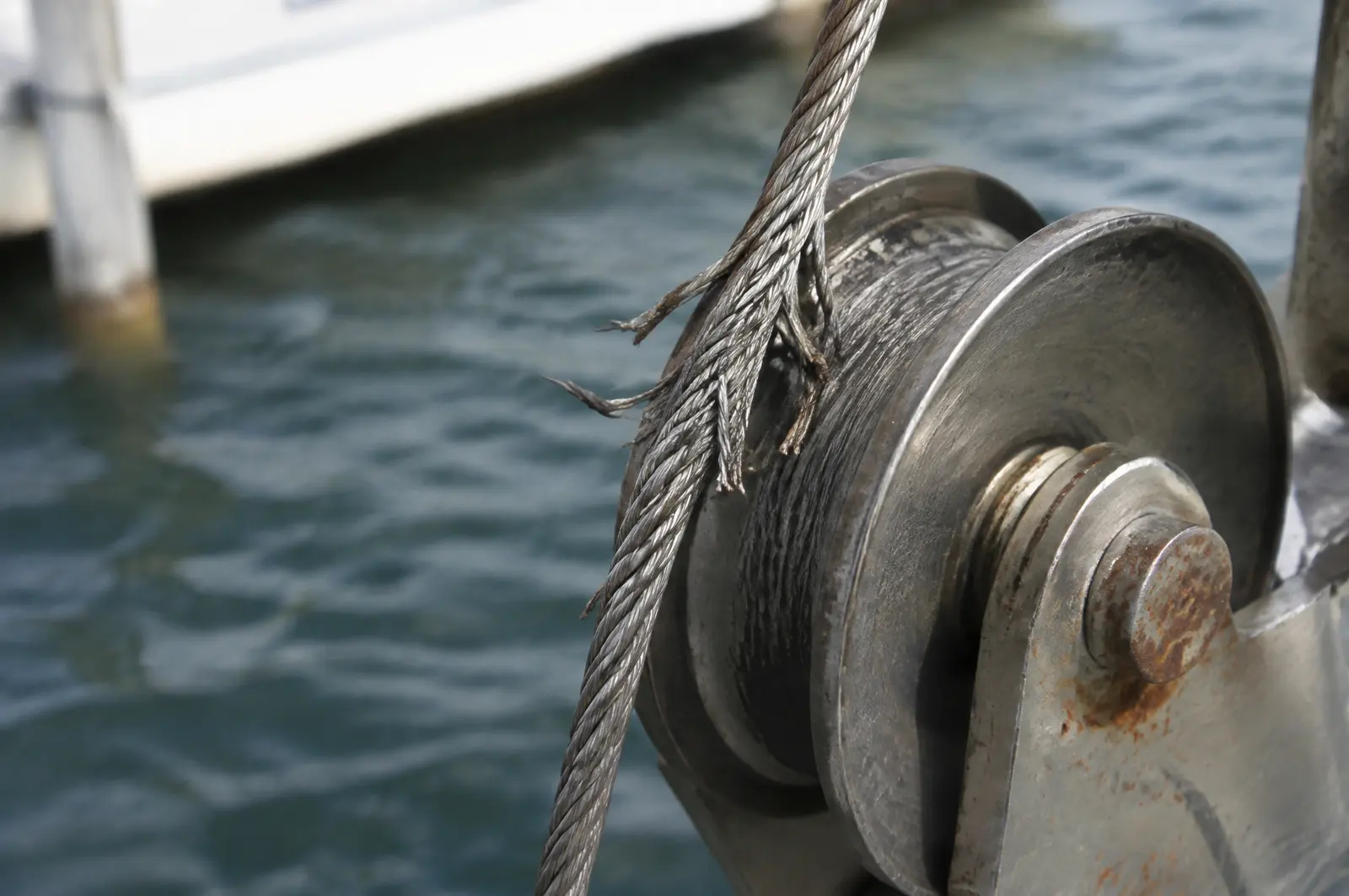
- Broken strands or rust on the cable
- Cable flattened where it wraps the drum
- Uneven lift between the two sides
- Motor overheating or tripping the breaker
- Grinding or slipping gearbox
Tide at Government Cut
NOAA's Miami Harbor Entrance gauge at Government Cut, beside South Beach, shows a 2.46 ft mean range and a 2.70 ft great diurnal range, with mean higher high water about 0.33 ft above NAVD 88 (1983 to 2001 epoch). A wall at 5.7 ft NAVD therefore stands roughly 5.4 ft above an average high tide, the margin the City wants for king tides and sea level rise.
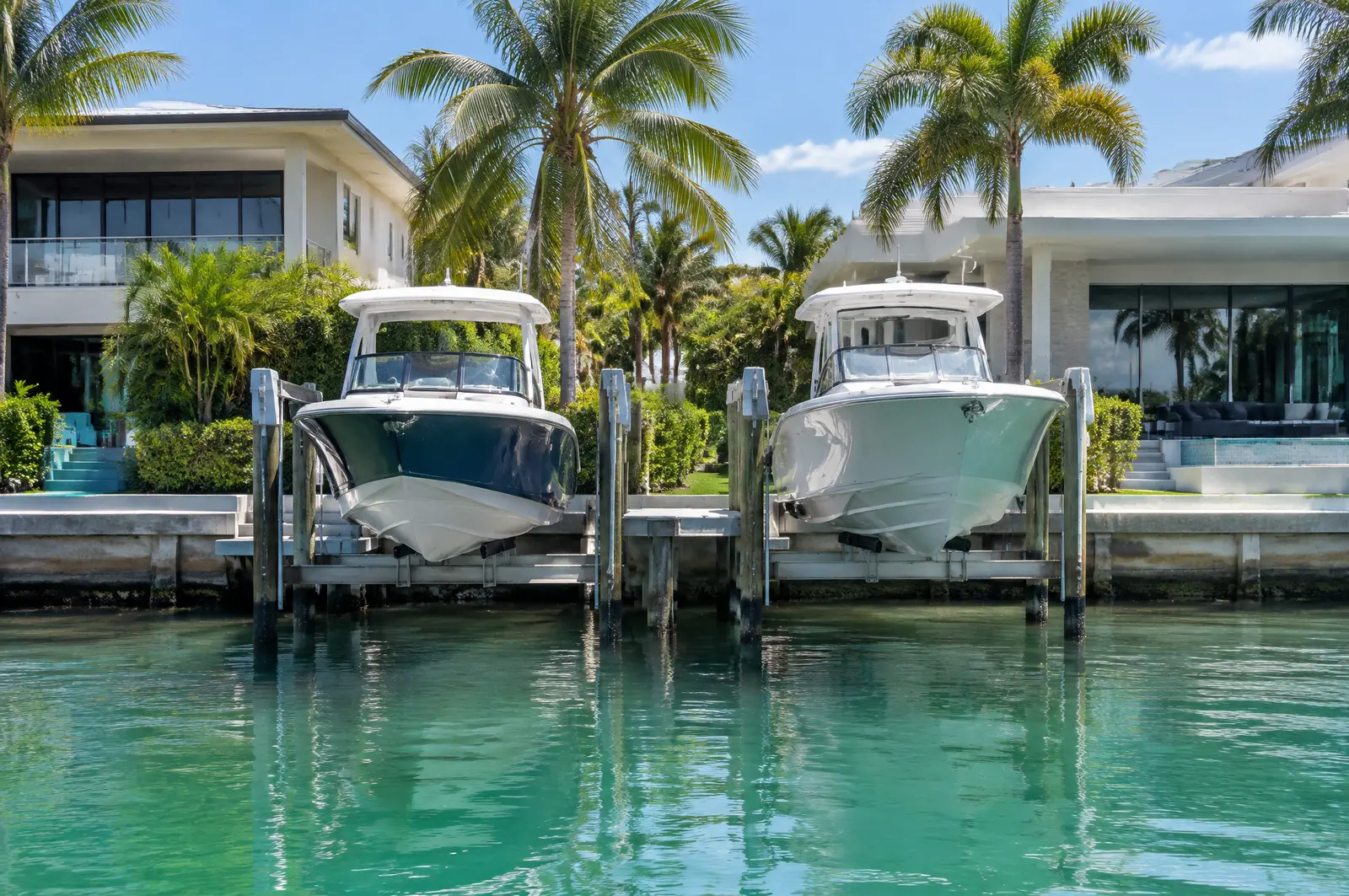
Cables and motors are sized to lift the boat clear of that tide range, and they wear fastest where salt water reaches them.[1]
A Class 5 flood insurance community
Miami Beach moved to Class 5 in FEMA's Community Rating System in 2019, raising the citywide flood insurance saving from 20% to 25% from 1 May 2019. The City also notes that groundwater rises through the porous rock under the island, which is why barriers and vents matter even behind a raised seawall.
Motors and switches are mounted above likely flood levels where the lift allows it.[2][3]
Citations for overtopping
If tidal water flows over or through a wall, the City can cite the owner, and owners without a seawall can be cited too. After a citation there are 10 days to appeal, 60 days to show progress and 730 days to finish, with fines of $250 for a first offence and then $500 a day.[4]
What makes Miami Beach different
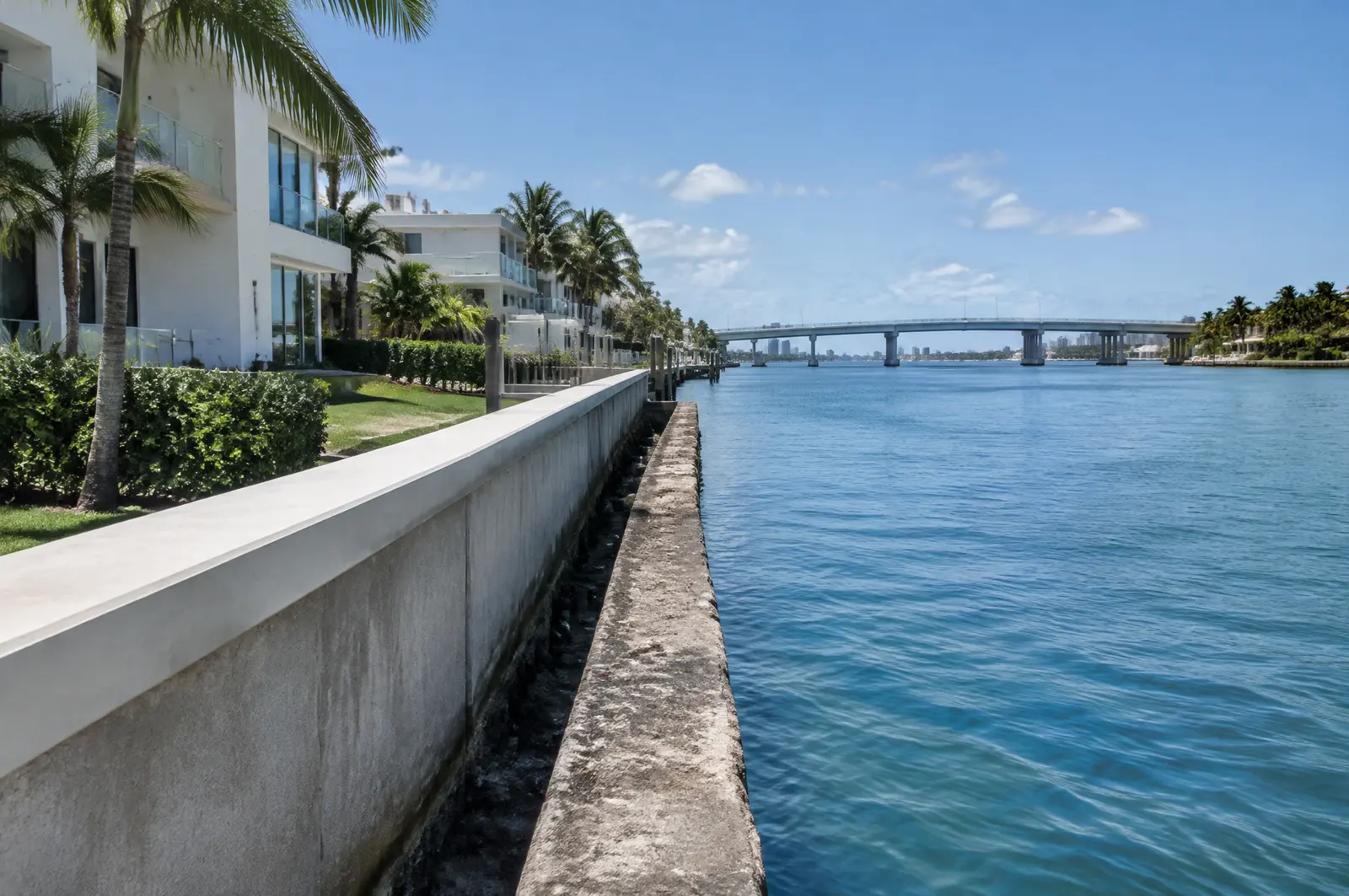
The city has about 55 miles of seawall, of which only about 5 miles are publicly owned, so most of it is the responsibility of private owners. Its seawall ordinance dates from Resolution R2016-4009 in May 2016, was strengthened in January 2021 and amended again in July 2025.[4][6]
Groundwater and flooding
The city notes that groundwater rises through the porous bedrock under Miami Beach, so a seawall alone cannot stop flooding. A raised wall stops tidal overtopping; drainage and flood protection handle the rest.[3]
Permits in Miami Beach
- City of Miami Beach Building Department: Building permit with a site plan, structural plans and an elevation certification.
- Miami-Dade DERM, Coastal Resources Section: Class I permit or exemption for seawalls, docks and lifts on the island canals and the bay, issued alongside the City permit. Phone (305) 372-6575.
- Florida DEP or South Florida Water Management District: State review where a dock or wall reaches open Biscayne Bay, part of the aquatic preserve, where FDEP's free online self-certification is not available.
- US Army Corps of Engineers, Jacksonville District: Federal authorisation for work in Biscayne Bay and Indian Creek; we confirm the small-project route since SPGP VI's stated July 2026 expiry.
Cable care that makes cables last
Inspect cables at least once a season, use penetrating oil rather than grease, lubricate pulleys and gearboxes, and replace worn cables immediately. In salt water, keep the sacrificial anodes fresh.[8]
Frequently asked questions
How big is the tide in Miami Beach?
NOAA's Miami Harbor Entrance gauge shows a mean range of 2.46 ft and a great diurnal range of 2.70 ft (1983 to 2001 epoch).
What flood insurance discount applies in Miami Beach?
Miami Beach reached Community Rating System Class 5 in 2019, which raised the saving on flood premiums from 20% to 25% citywide.
What happens if Miami Beach cites my seawall?
You have 10 days to appeal, 60 days to show progress and 730 days to complete repairs. Fines are $250 for a first offence and then $500 a day.
Sources
- Datums for station 8723170, Miami Harbor Entrance (tidal epoch 1983 to 2001), NOAA Center for Operational Oceanographic Products and Services (CO-OPS), Tides and Currents. Accessed October 28, 2026.
- Press release: Miami Beach Receives Improved Class 5 Rating from FEMA (3 April 2019), City of Miami Beach, Department of Marketing and Communications. Accessed October 28, 2026.
- Rising Above the Risk: Frequently Asked Questions (05/05/2017), City of Miami Beach. Accessed October 27, 2026.
- Seawall FAQs (Miami Beach Rising Above, PDF dated 6.16.25), City of Miami Beach. Accessed October 27, 2026.
- Private Property Adaptation (PPA) program, City of Miami Beach (Miami Beach Rising Above). Accessed October 27, 2026.
- Seawalls (Public Infrastructure), City of Miami Beach (Miami Beach Rising Above). Accessed October 27, 2026.
- Class I Permit Application for Coastal Construction and Mangrove Trimming within Miami-Dade County (Revised May 2025), Miami-Dade County RER, Division of Environmental Resources Management (DERM), Coastal Resources Section. Accessed October 27, 2026.
- Top Boat Lift Maintenance Tips (31 Jul 2025), ShoreMaster (boat lift manufacturer). Accessed October 27, 2026.
Get a free quote
Tell us about your project and we will get back to you fast.