
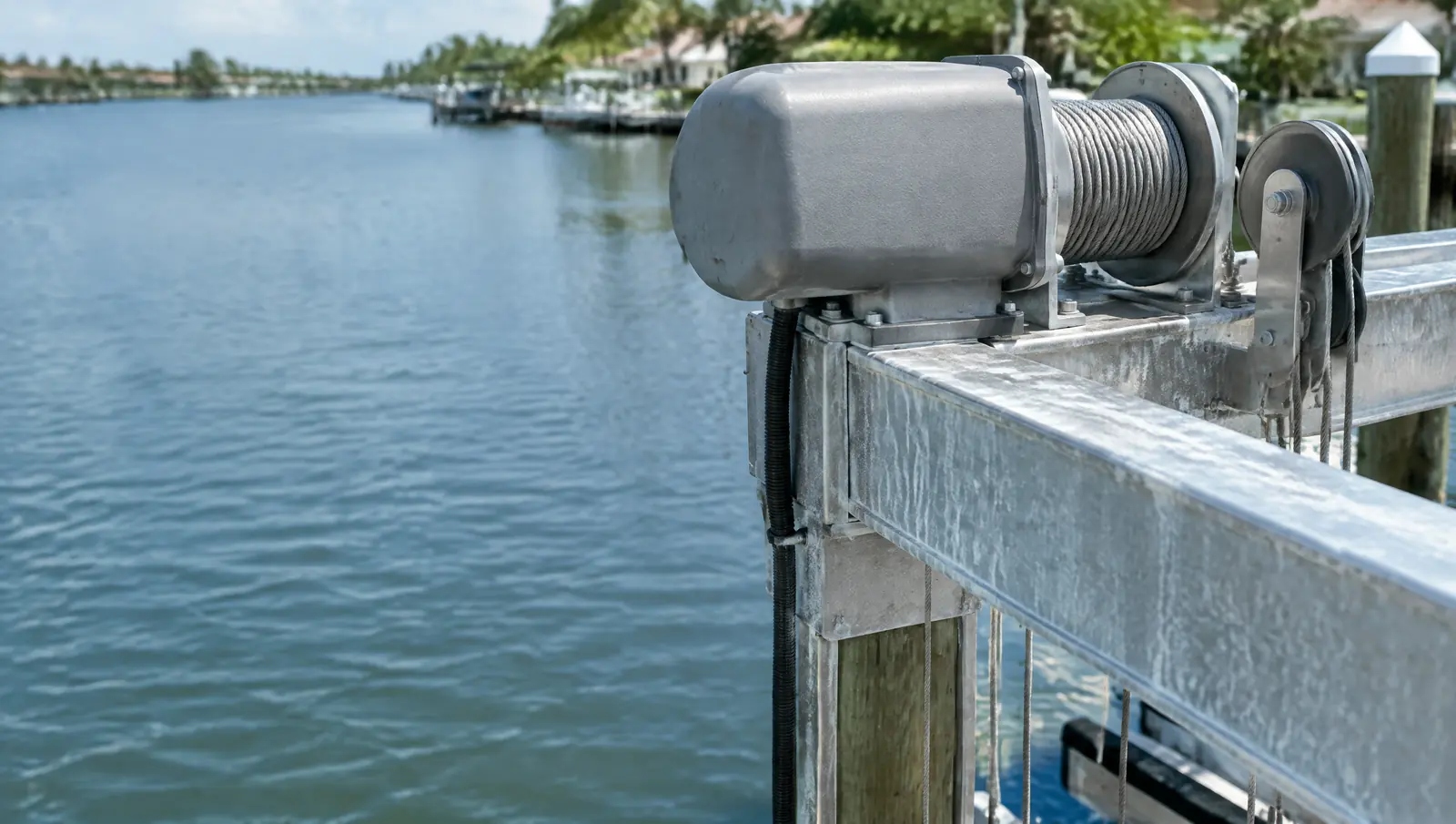
Boat lift motors and cables in Coral Gables
Boat lift motors and cables for Coral Gables homes, where the south bay tide swings about 2.13 ft.
Free Fast Quote
Please fill out this form to request a free quote on your upcoming project and we will respond to you right away!
We replace worn cables, motors, gearboxes, pulleys and switches with marine-rated parts, and set the cables to even tension.
- Free, no-obligation quote
- Fast response from our team
- Miami-Dade, Broward, Palm Beach and the Keys
The short answer
NOAA's Cutler gauge south of Coral Gables shows a 2.13 ft great diurnal tide range, about half a foot less than at Government Cut. In Coral Gables every floodplain improvement, from flood barriers to fill and air conditioning pads, needs a Development Services permit.
Last updated
Signs it is time
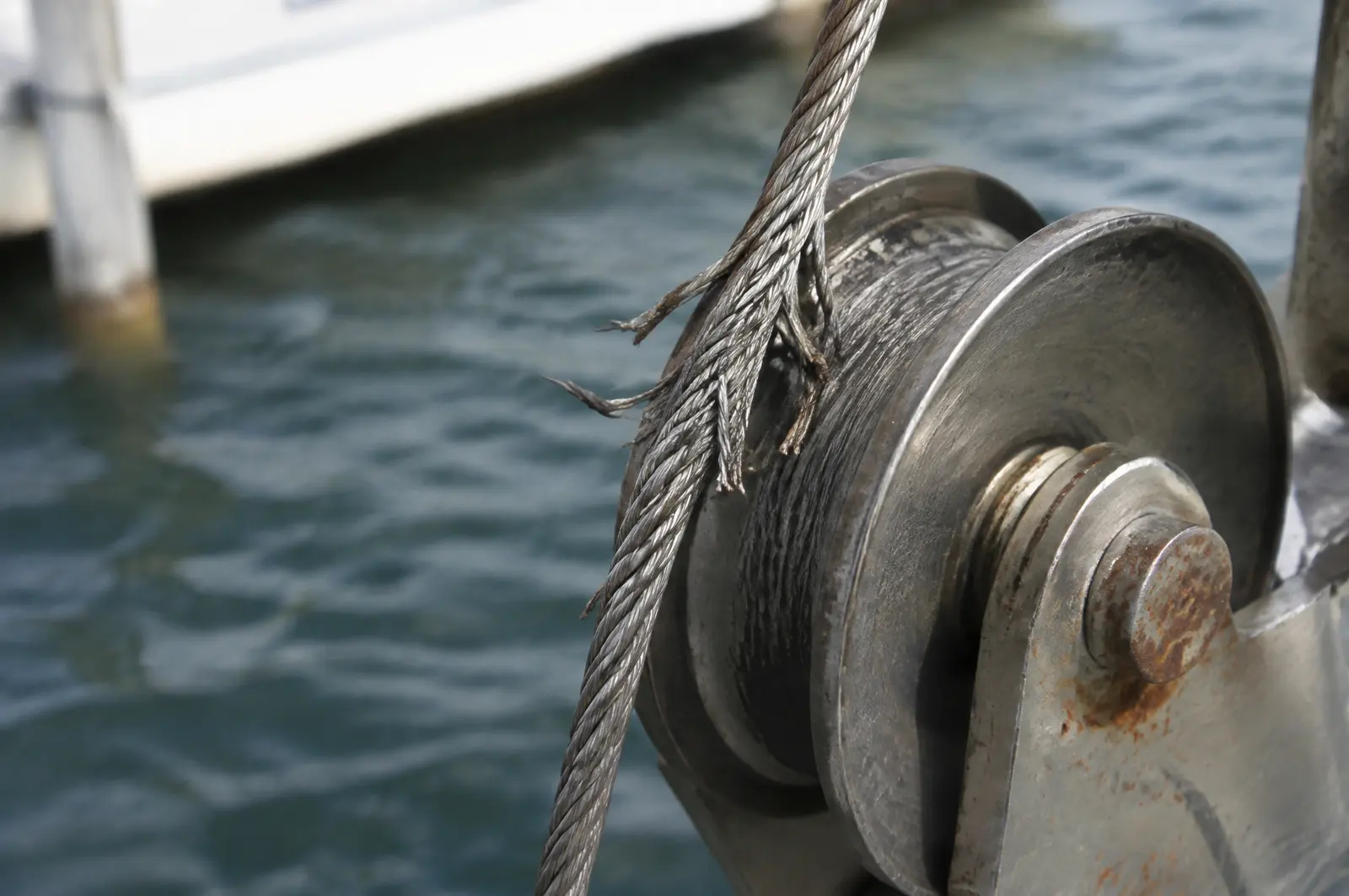
- Broken strands or rust on the cable
- Cable flattened where it wraps the drum
- Uneven lift between the two sides
- Motor overheating or tripping the breaker
- Grinding or slipping gearbox
A smaller tide in the south bay
NOAA's Cutler gauge on Biscayne Bay, south of the Gables shoreline, shows a 1.94 ft mean range and a 2.13 ft great diurnal range, with mean higher high water about 0.19 ft above NAVD 88 (1983 to 2001 epoch). That is about half a foot less swing than at Government Cut, which helps lift and floating dock design in Cocoplum and Gables Estates.
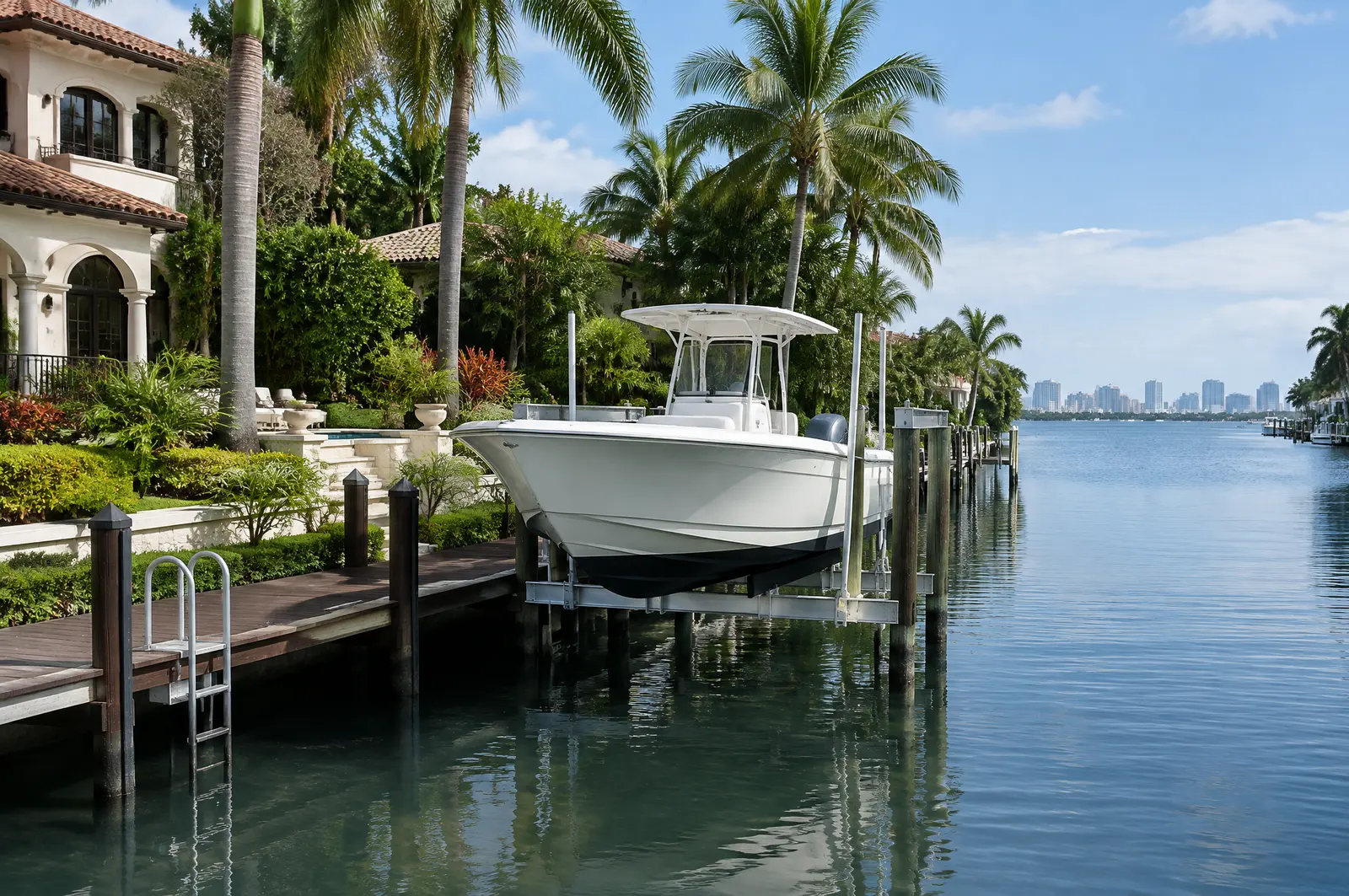
Cables and motors are sized to lift the boat clear of that tide range, and they wear fastest where salt water reaches them.[1][2]
Everything in the floodplain needs a permit
Coral Gables takes part in FEMA's Community Rating System and requires a Development Services permit for any development in the floodplain: not just buildings but fences, slabs, pools, air conditioners, grading and fill. Floodproofing measures need a building permit too, and the City suggests floodwalls around patios, landscaped berms and raised air conditioning platforms.
Motors and switches are mounted above likely flood levels where the lift allows it.[3]
Canals are part of the drainage
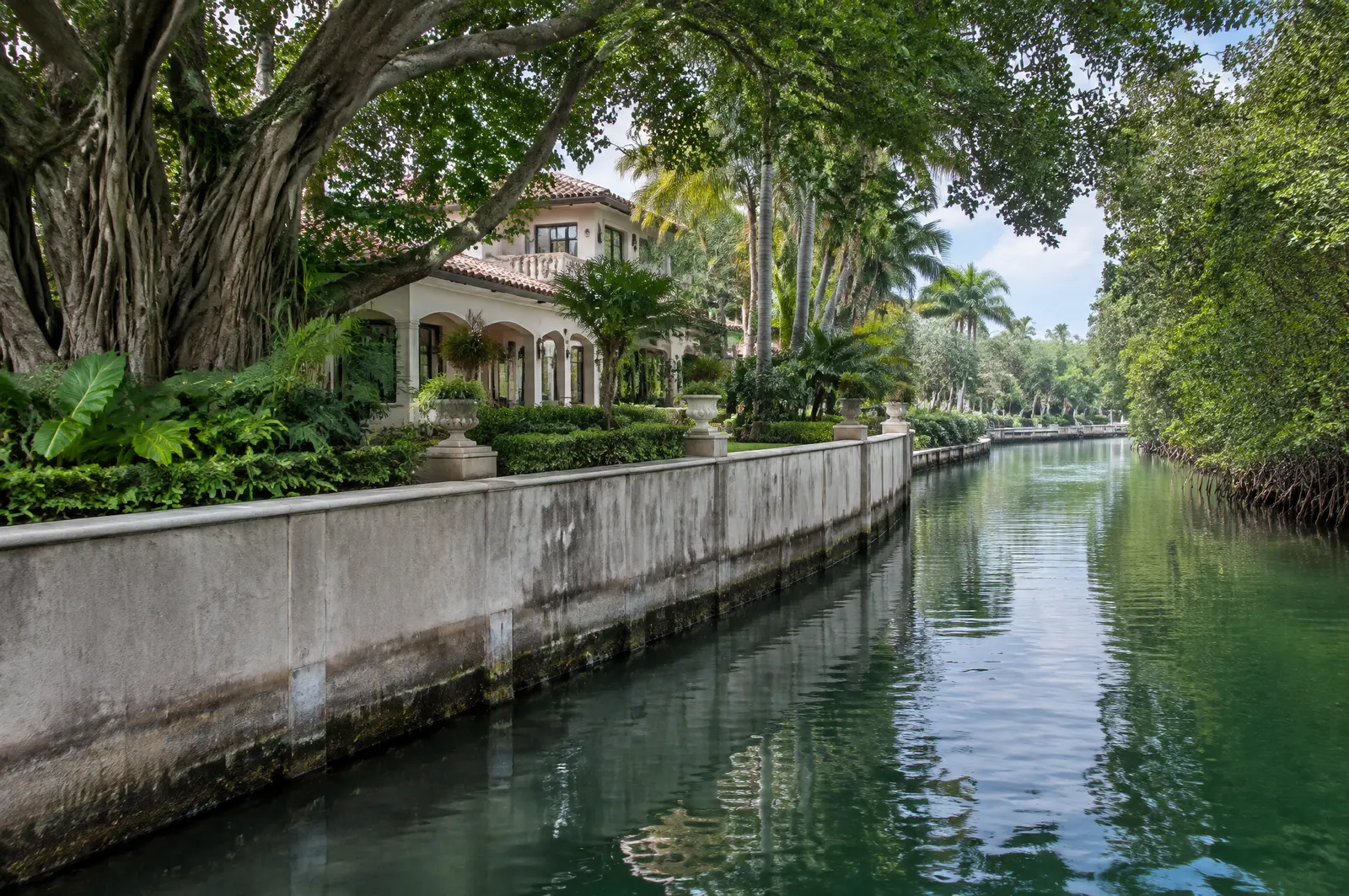
The City describes its canals as a drainage feature that carries floodwater away and protects them under City Code 86-3, with illegal dumping reported to the Marine Patrol. Riprap, mangrove trimming and wall work that narrows a canal are reviewed with that drainage role in mind.[3]
What makes Coral Gables different
Dock, mooring and wharf plans must show dimensions across the waterway, existing mangroves and the installation method, and carry DERM's preliminary approval; revised plans need a DERM stamp again. Properties in Cocoplum Section II must include a copy of the Cocoplum dock plan. The City also asks for a notarised Public Works permit application, colour photos of existing conditions and a survey.[5]
Fee incentives
Under Resolution 2025-342, living seawalls with pH-neutral cement or modular retrofit panels qualify for a 20% reduction in city permit fees, and a separate fee waiver applies to existing homes making seawall improvements to address sea level rise.[6]
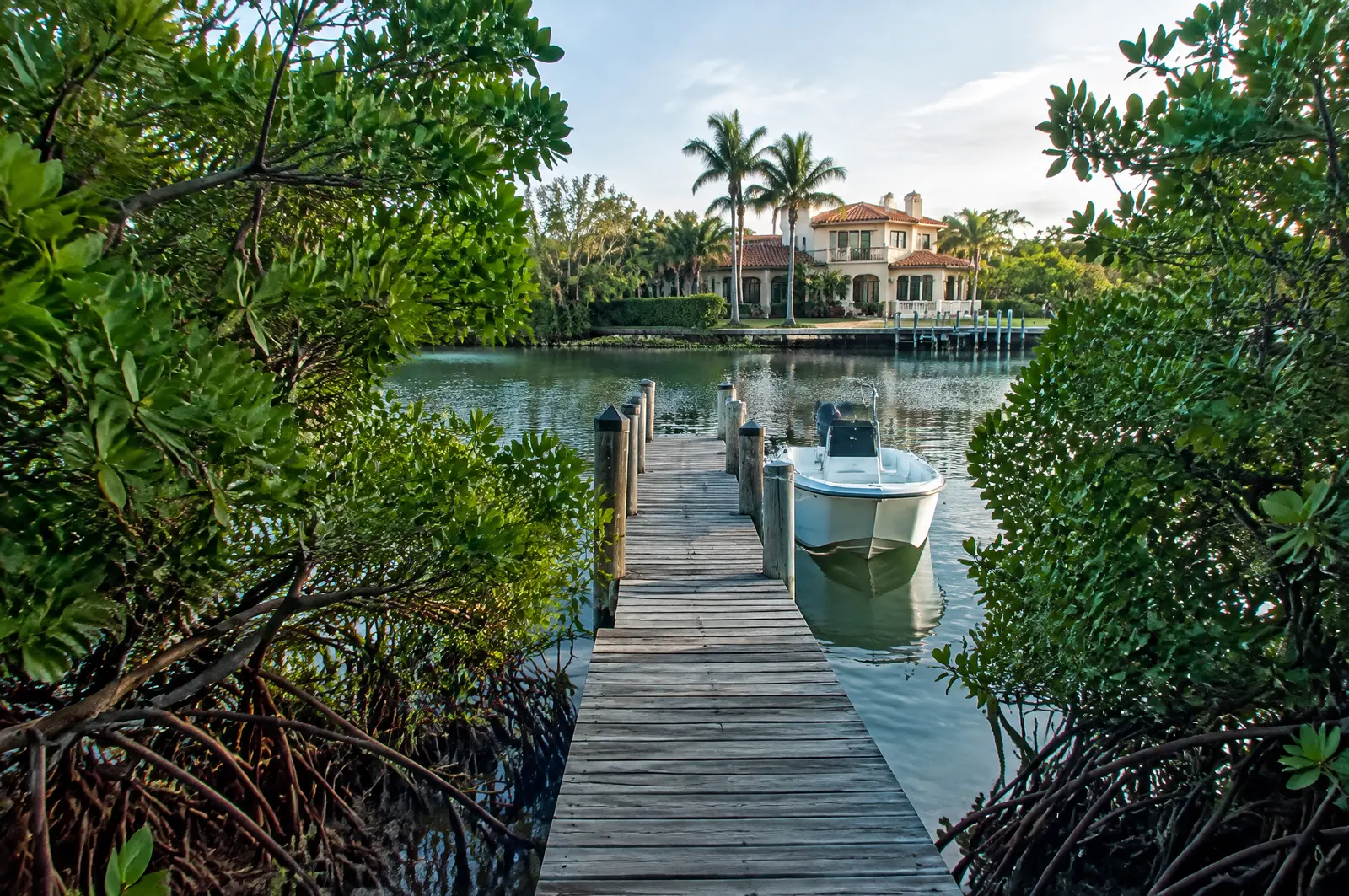
Permits in Coral Gables
- Miami-Dade DERM, Coastal Resources Section: Class I permit, plus the preliminary approval the City asks to see before it looks at any dock or wall plans. Phone (305) 372-6575.
- City of Coral Gables Development Services and Public Works: Building and Public Works permits for seawalls, bulkheads and docks, after DERM preliminary approval.
- Florida DEP or South Florida Water Management District: State permit or exemption for docks and walls on the Gables canals and the bay, where aquatic preserve rules apply to open bay frontage.
- US Army Corps of Engineers, Jacksonville District: Federal authorisation for bayfront and canal work, confirmed for each job since SPGP VI's stated July 2026 expiry.
Cable care that makes cables last
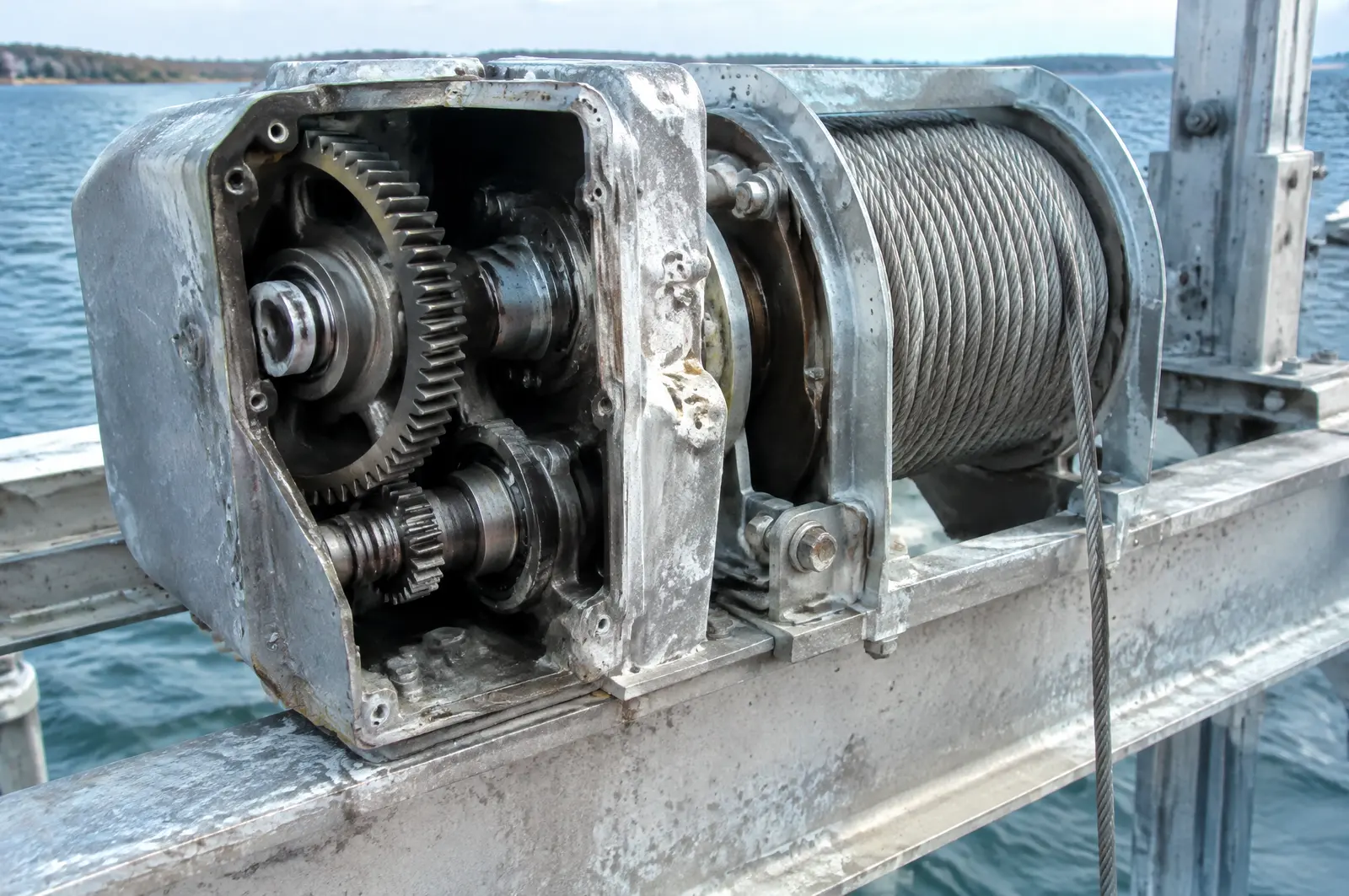
Inspect cables at least once a season, use penetrating oil rather than grease, lubricate pulleys and gearboxes, and replace worn cables immediately. In salt water, keep the sacrificial anodes fresh.[8]
Frequently asked questions
How much does the tide move in Coral Gables?
NOAA's Cutler station on Biscayne Bay shows a mean range of 1.94 ft and a great diurnal range of 2.13 ft (1983 to 2001 epoch).
Do I need a permit for flood panels or barriers in Coral Gables?
Yes. The City requires building permits to install floodproofing measures, and any development in the floodplain needs Development Services approval.
Why does Coral Gables care what goes into its canals?
The canals carry floodwater away, so City Code 86-3 protects them, and the City asks residents to report dumping to the Marine Patrol.
Sources
- Datums for station 8723289, Cutler, Biscayne Bay (tidal epoch 1983 to 2001), NOAA Center for Operational Oceanographic Products and Services (CO-OPS), Tides and Currents. Accessed October 28, 2026.
- Datums for station 8723170, Miami Harbor Entrance (tidal epoch 1983 to 2001), NOAA Center for Operational Oceanographic Products and Services (CO-OPS), Tides and Currents. Accessed October 28, 2026.
- Flood Management Brochure, City of Coral Gables, Development Services. Accessed October 28, 2026.
- CAO 2022-007: Legal Opinion Regarding Scrivener's Error in Zoning Code 3-706 Bulkheads and Retaining Walls (17 Aug 2022), City of Coral Gables, City Attorney. Accessed October 27, 2026.
- Permit Requirements for Development Services (rev. 07.22.2026), section Docks/Moorings/Wharves, City of Coral Gables Development Services Department. Accessed October 27, 2026.
- Solar, Open Air Dining, and Other Permits, City of Coral Gables. Accessed October 27, 2026.
- Class I Permit Application for Coastal Construction and Mangrove Trimming within Miami-Dade County (Revised May 2025), Miami-Dade County RER, Division of Environmental Resources Management (DERM), Coastal Resources Section. Accessed October 27, 2026.
- Top Boat Lift Maintenance Tips (31 Jul 2025), ShoreMaster (boat lift manufacturer). Accessed October 27, 2026.
Get a free quote
Tell us about your project and we will get back to you fast.