
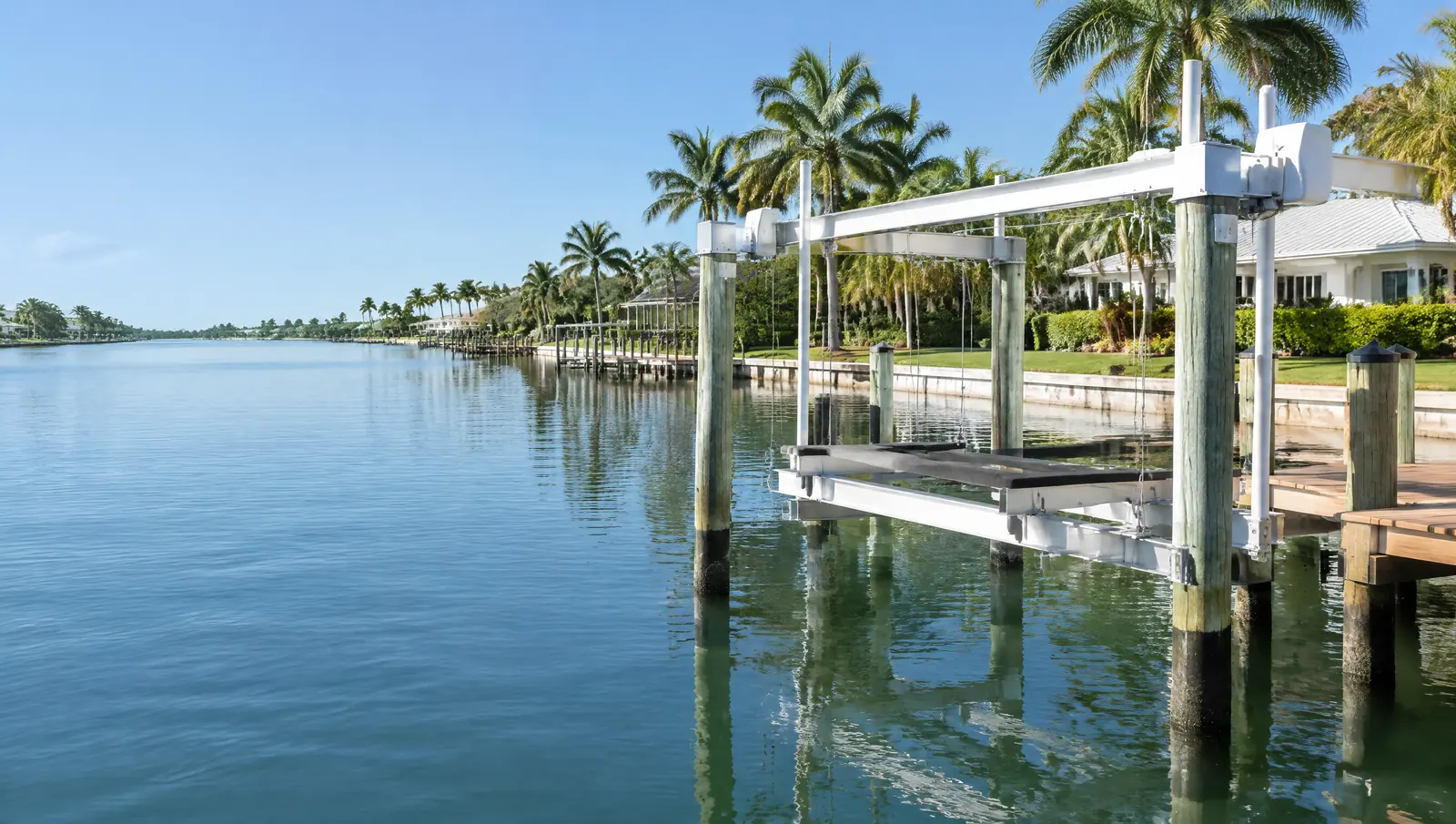
Boat lift installation in Miami Beach
Miami Beach boat lift installation kept within 25% of the canal width on the narrow island canals.
Free Fast Quote
Please fill out this form to request a free quote on your upcoming project and we will respond to you right away!
We size the lift to your boat's weight, set new pilings where needed, run the electrics and handle the permits. Moving an existing lift is planned the same way.
- Free, no-obligation quote
- Fast response from our team
- Miami-Dade, Broward, Palm Beach and the Keys
The short answer
On Miami Beach's narrow canals, DERM keeps docks, lifts and davits within 25% of the waterway width and may ask for a neighbour's consent. Miami Beach work follows Miami-Dade's manatee zones (rule 68C-22.025), and winter jobs plan for more 50 ft shutdowns as manatees move into the bay.
Last updated
Which lift suits you
The right lift depends on how you moor.
- Four-post lift: on its own pilings in a slip beside the dock
- Elevator lift: mounted on the seawall face, good where pilings are hard to place
- Floating lift: for jet skis and small boats, no pilings
Typical project sizes
New pilings can turn a $10,000 lift project into $15,000 or more, so a slip with sound pilings costs less to fit out.
Narrow island canals and the 25% rule
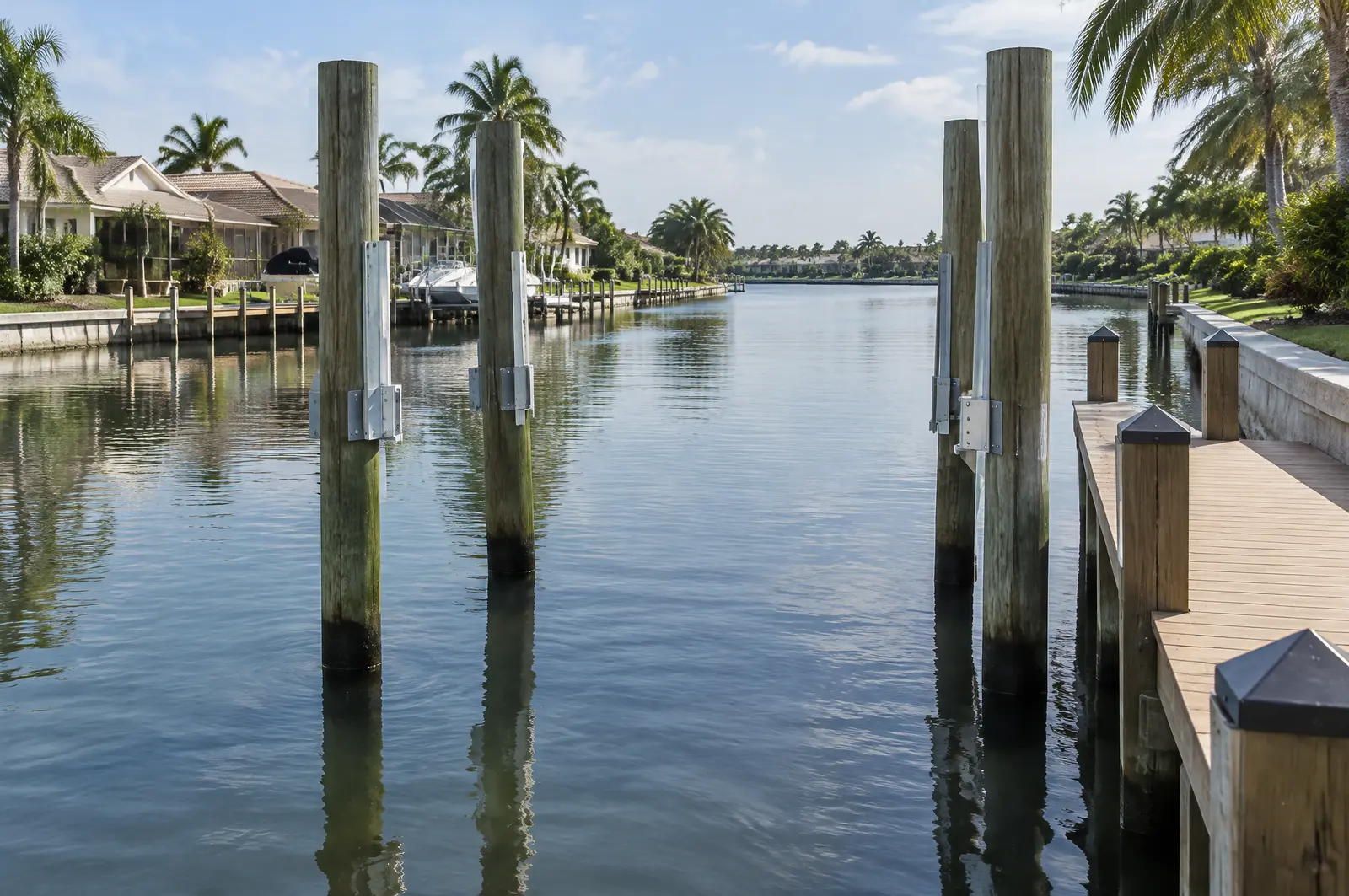
On the narrower Miami Beach canals, DERM's short form allows a dock, lift or davit to reach no more than 25% of the waterway width. DERM also uses a D-5 boundary to protect a neighbour's view and access, so it may ask for a letter of consent from the lot next door.
We choose the lift type and position to that rule before anything is ordered.[1]
Manatee season in the bay
Miami Beach waters are inside Miami-Dade's manatee protection zones under rule 68C-22.025, and the aquatic preserve notes manatees moving into the bay for warmer water in cooler months. Winter pile driving and seawall jobs plan for more 50 ft shutdowns and keep turbidity curtains non-entangling.
Most new lifts need new piles, so the piling rules apply too.[2][3][4]
Two permits, one elevation certificate
A Miami Beach seawall or dock job needs a City building permit with a site plan, structural plans and an elevation certification, plus Miami-Dade DERM Coastal Resources approval. FDEP and the Army Corps come in where the work reaches state or federal waters, which on the island canals is common.
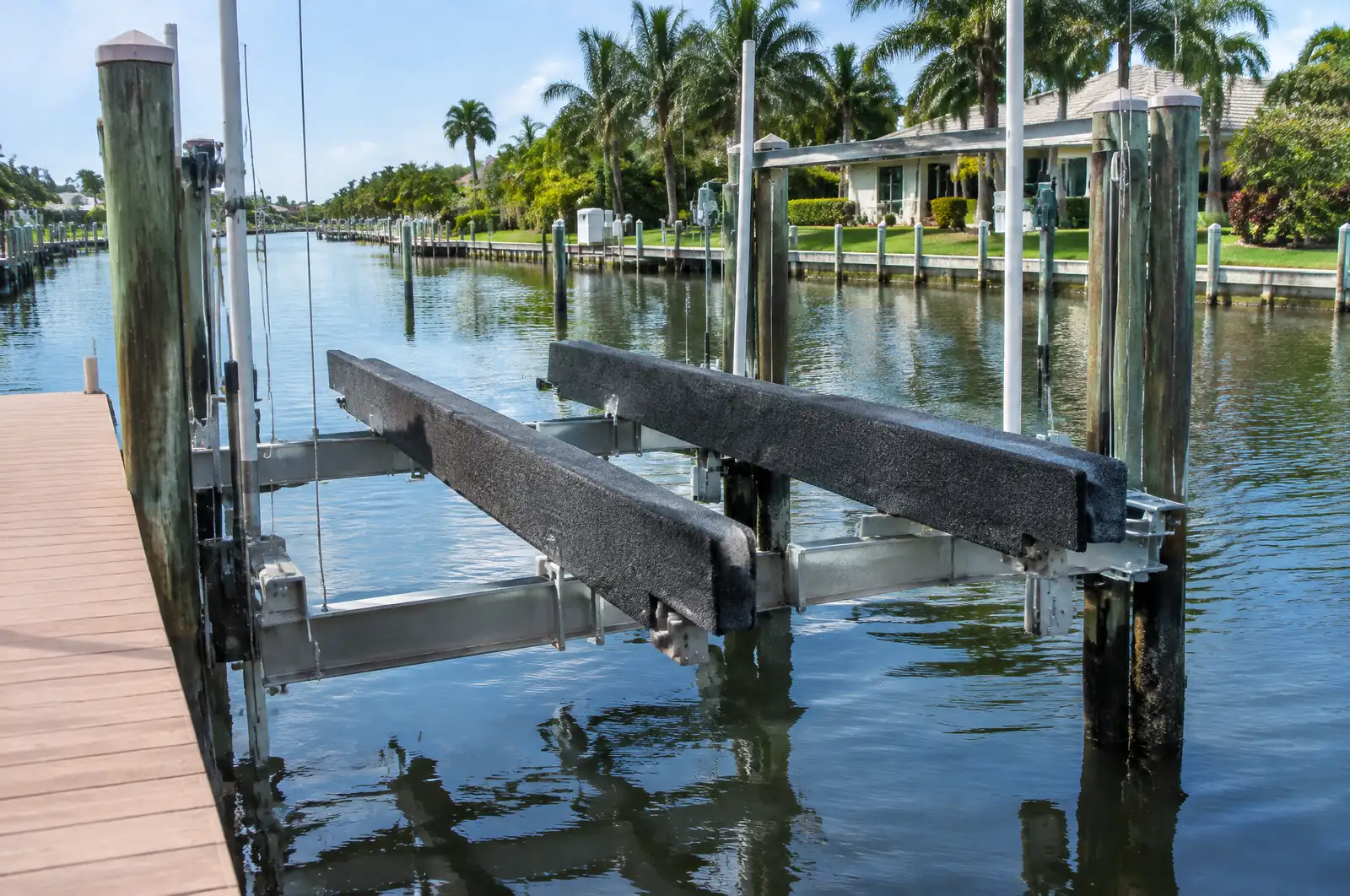
New lifts need drawings, and often new piles, so the permit comes first.[5]
What makes Miami Beach different
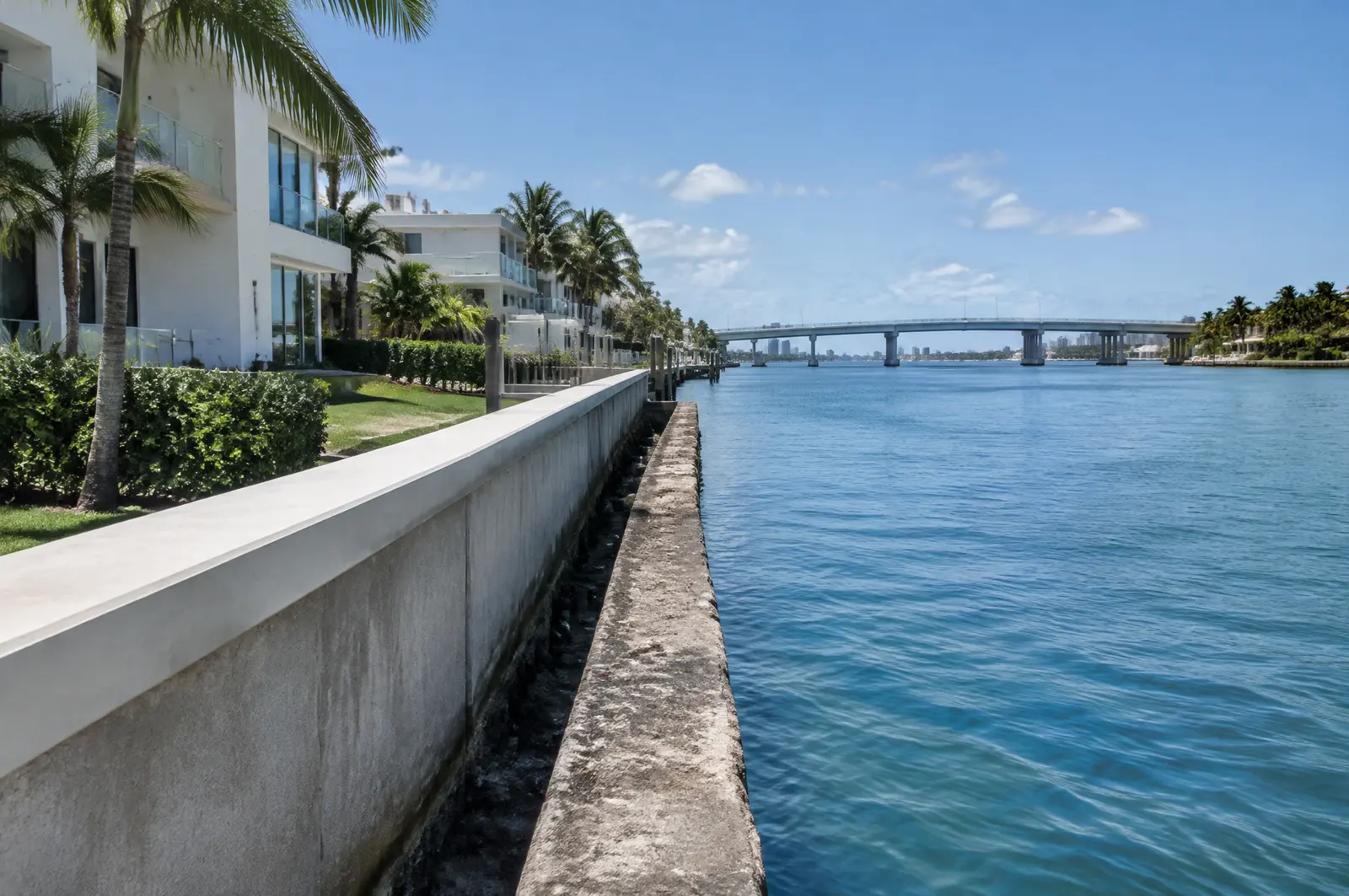
The city has about 55 miles of seawall, of which only about 5 miles are publicly owned, so most of it is the responsibility of private owners. Its seawall ordinance dates from Resolution R2016-4009 in May 2016, was strengthened in January 2021 and amended again in July 2025.[5][7]
Groundwater and flooding
The city notes that groundwater rises through the porous bedrock under Miami Beach, so a seawall alone cannot stop flooding. A raised wall stops tidal overtopping; drainage and flood protection handle the rest.[8]
Permits in Miami Beach
- City of Miami Beach Building Department: Building permit with a site plan, structural plans and an elevation certification.
- Miami-Dade DERM, Coastal Resources Section: Class I permit or exemption for seawalls, docks and lifts on the island canals and the bay, issued alongside the City permit. Phone (305) 372-6575.
- Florida DEP or South Florida Water Management District: State review where a dock or wall reaches open Biscayne Bay, part of the aquatic preserve, where FDEP's free online self-certification is not available.
- US Army Corps of Engineers, Jacksonville District: Federal authorisation for work in Biscayne Bay and Indian Creek; we confirm the small-project route since SPGP VI's stated July 2026 expiry.
Permits for a new lift
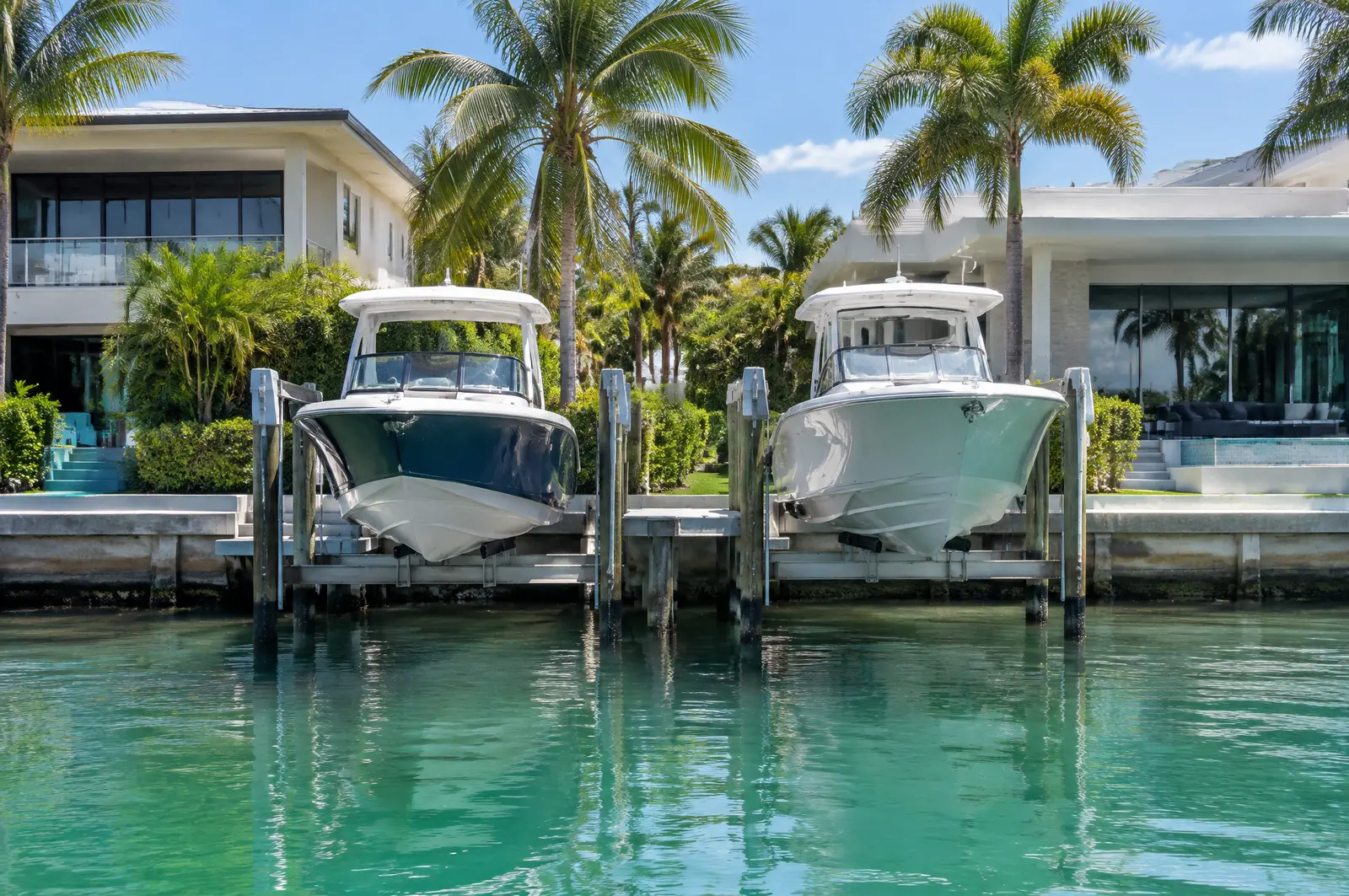
Miami-Dade issues a short-form DERM permit for a lift on a new or existing dock, seawall or bulkhead, as long as a single-family lift does not protrude more than 25% of the waterway width. Florida exempts floating boat lifts and floating platforms up to 500 sq ft combined (200 sq ft in Outstanding Florida Waters). In aquatic preserves, a roof may not overhang more than 1 ft beyond the lift and boat.[1][11][12]
Relocating a lift
Moving a lift to a new slip or a new home is a new installation in the eyes of the permit office, so we plan pilings and permits for the new spot. Removing the old lift and old piles is DERM-exempt in Miami-Dade.[1]
| Lift | Figure | Source and scope |
|---|---|---|
| 10,000 lb four-post, installed | $7,000 to $14,000 | ThePricer, South Florida, 2026 |
| 10,000 lb elevator, equipment only | About $12,480 | ThePricer, 2026 |
| Hydraulic lift, equipment only | About $10,505 to $27,987 | ThePricer, 2026 |
| Installation labour | $500 to $3,000 or more | ThePricer, 2026 |
Frequently asked questions
Can a neighbour object to my boat lift in Miami Beach?
DERM's D-5 boundary protects neighbours' view and access, and DERM may ask for a letter of consent. The lift must also stay within 25% of the waterway width for the short form.
Does winter change marine work in Miami Beach?
It can. Manatees move into Biscayne Bay in the cooler months, and work stops whenever one comes within 50 ft, so winter schedules allow for pauses.
Which permits does a Miami Beach seawall or dock need?
A City of Miami Beach building permit with a site plan, structural plans and an elevation certification, plus Miami-Dade DERM approval, and FDEP or Army Corps approval where they apply.
Sources
- Class I Permit Application for Coastal Construction and Mangrove Trimming within Miami-Dade County (Revised May 2025), Miami-Dade County RER, Division of Environmental Resources Management (DERM), Coastal Resources Section. Accessed October 27, 2026.
- Manatee Data and Maps (county manatee protection zone and boating restricted area maps), Florida Fish and Wildlife Conservation Commission (FWC). Accessed October 28, 2026.
- Biscayne Bay Aquatic Preserve, Florida Department of Environmental Protection, Office of Resilience and Coastal Protection. Accessed October 28, 2026.
- Standard Manatee Conditions for In-Water Work (2011), Florida Fish and Wildlife Conservation Commission (FWC). Accessed October 27, 2026.
- Seawall FAQs (Miami Beach Rising Above, PDF dated 6.16.25), City of Miami Beach. Accessed October 27, 2026.
- Private Property Adaptation (PPA) program, City of Miami Beach (Miami Beach Rising Above). Accessed October 27, 2026.
- Seawalls (Public Infrastructure), City of Miami Beach (Miami Beach Rising Above). Accessed October 27, 2026.
- Rising Above the Risk: Frequently Asked Questions (05/05/2017), City of Miami Beach. Accessed October 27, 2026.
- Press release: Miami Beach Receives Improved Class 5 Rating from FEMA (3 April 2019), City of Miami Beach, Department of Marketing and Communications. Accessed October 28, 2026.
- How Much Does a Boat Lift Cost? (updated 11 Aug 2026), ThePricer.org (secondary cost guide; cited in the FCC master plan). Accessed October 27, 2026.
- Florida Statutes 2026, Section 403.813: Permits issued at district centers; exceptions, The Florida Legislature (Online Sunshine). Accessed October 27, 2026.
- Dock Permitting in Florida: Permit Application Fee Schedule and Aquatic Preserve Design Criteria, Florida Department of Environmental Protection (FDEP). Accessed October 27, 2026.
Get a free quote
Tell us about your project and we will get back to you fast.