
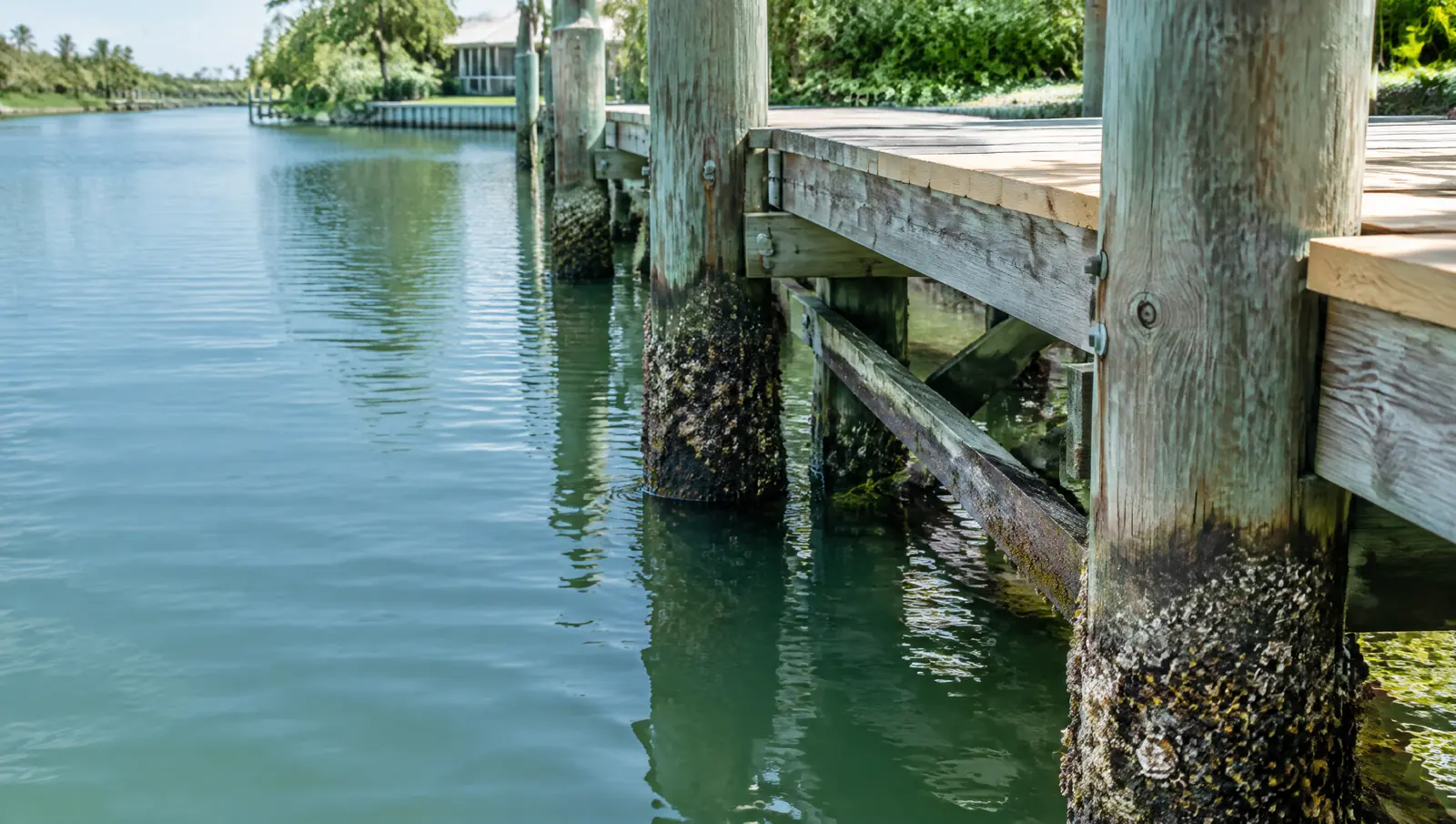
Dock repair in Key Largo
Dock repair in Key Largo, where pier docks stop at 4 ft wide and 100 ft long.
Free Fast Quote
Please fill out this form to request a free quote on your upcoming project and we will respond to you right away!
We repair and replace decking, handrails, framing and pilings, and tell you when a dock is past saving.
- Free, no-obligation quote
- Fast response from our team
- Miami-Dade, Broward, Palm Beach and the Keys
The short answer
A Key Largo pier dock may be 4 ft wide and no longer than twice the shoreline frontage or 100 ft, unless a special exception is granted. Key Largo dock pilings must be recycled plastic, concrete or wrapped in a 30 mil sleeve from below the bottom to 2 ft above high water.
Last updated
Signs your dock needs repair
Fix these early. Salt water and sun speed up every one.
- Soft, split or loose boards
- Wobbly handrails or cleats pulling out
- Pilings with deep cracks or worn at the waterline
- Sagging framing between pilings
Typical project sizes
Most repairs are a section of decking, a few pilings or a set of rails. Florida law exempts repair or replacement of a dock within 5 ft of the same location, no larger than before and with no fill.
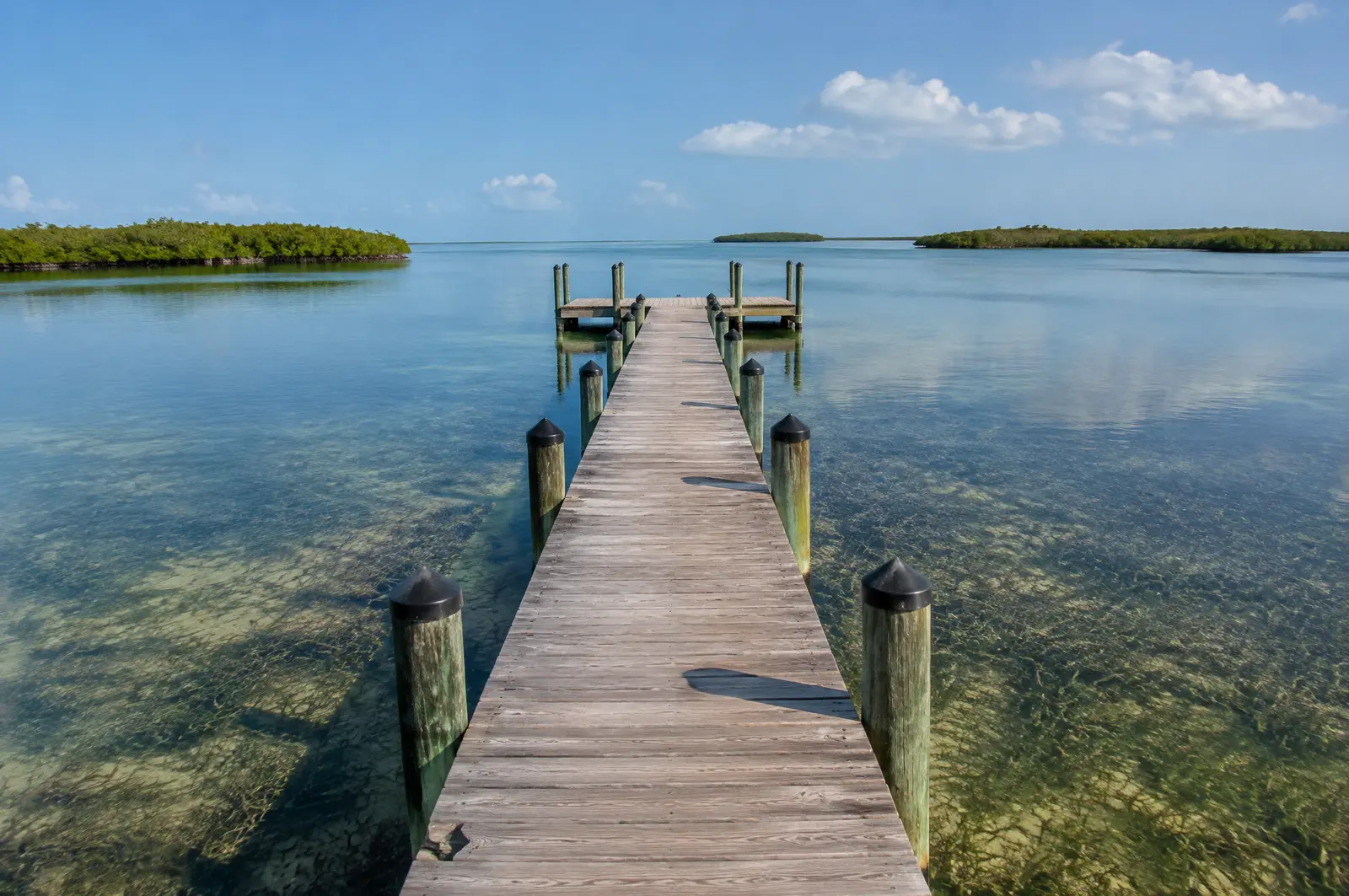
Pier docks: 4 ft wide, 100 ft long
Pier docks in unincorporated Monroe County may be no wider than 4 ft and no longer than twice the lot's shoreline frontage or 100 ft, whichever is less. Reaching deeper water takes a Dock Length Special Exception, which costs $1,450 plus $3 per shoreline owner within 300 ft.
A repair that changes the footprint has to meet today's limit, not the one the old dock was built to.[1][2]
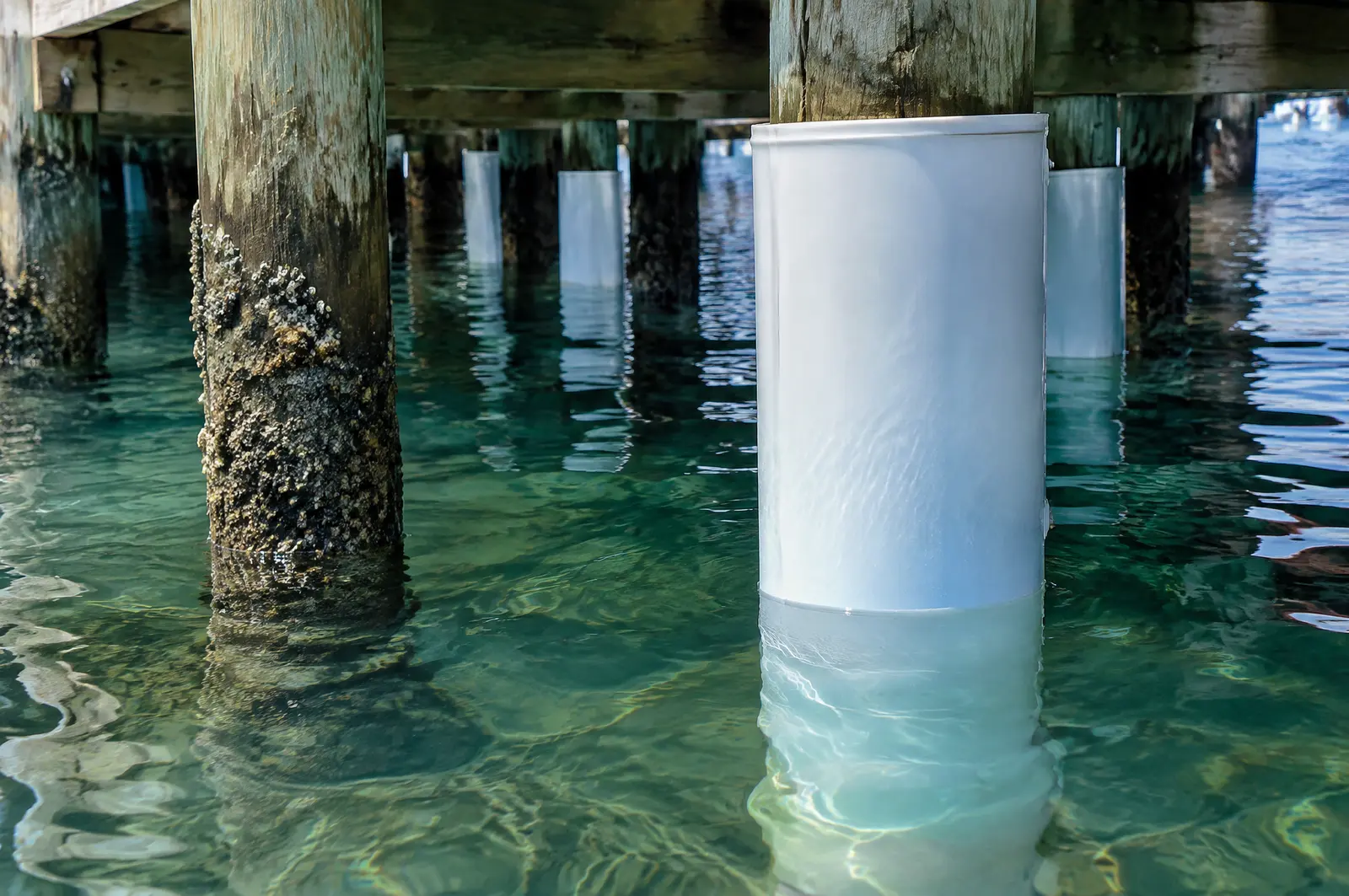
No leaching piles
Every dock piling in unincorporated Monroe County must be non-CCA-leaching, such as recycled plastic or concrete, or be wrapped in an impermeable sleeve at least 30 mil thick from 6 in below the bottom to 2 ft above mean high water. That changes the piling order before a Key Largo job starts.
Most dock repairs start with the pilings, so the piling rules shape the repair.[1]
The Sanctuary starts at high water
The shoreward boundary of the Florida Keys National Marine Sanctuary is the mean high water mark, so once work steps into Key Largo's water it is inside the Sanctuary. Monroe County lists boating restricted areas under rule 68D-24.144, and County approvals wait on state and federal permits before a Notice to Proceed.
Grass and hard bottom decide where the dock can go and how high it sits.[3][4][1]
What makes Key Largo different
The special exception application asks owners to describe the submerged lands the dock crosses, such as sand, seagrass or coral, and the minimum extra length needed to reach adequate water depth. The site plan must be prepared by a Florida registered architect, engineer or landscape architect and show the mean high water line and shoreline setbacks.[2]
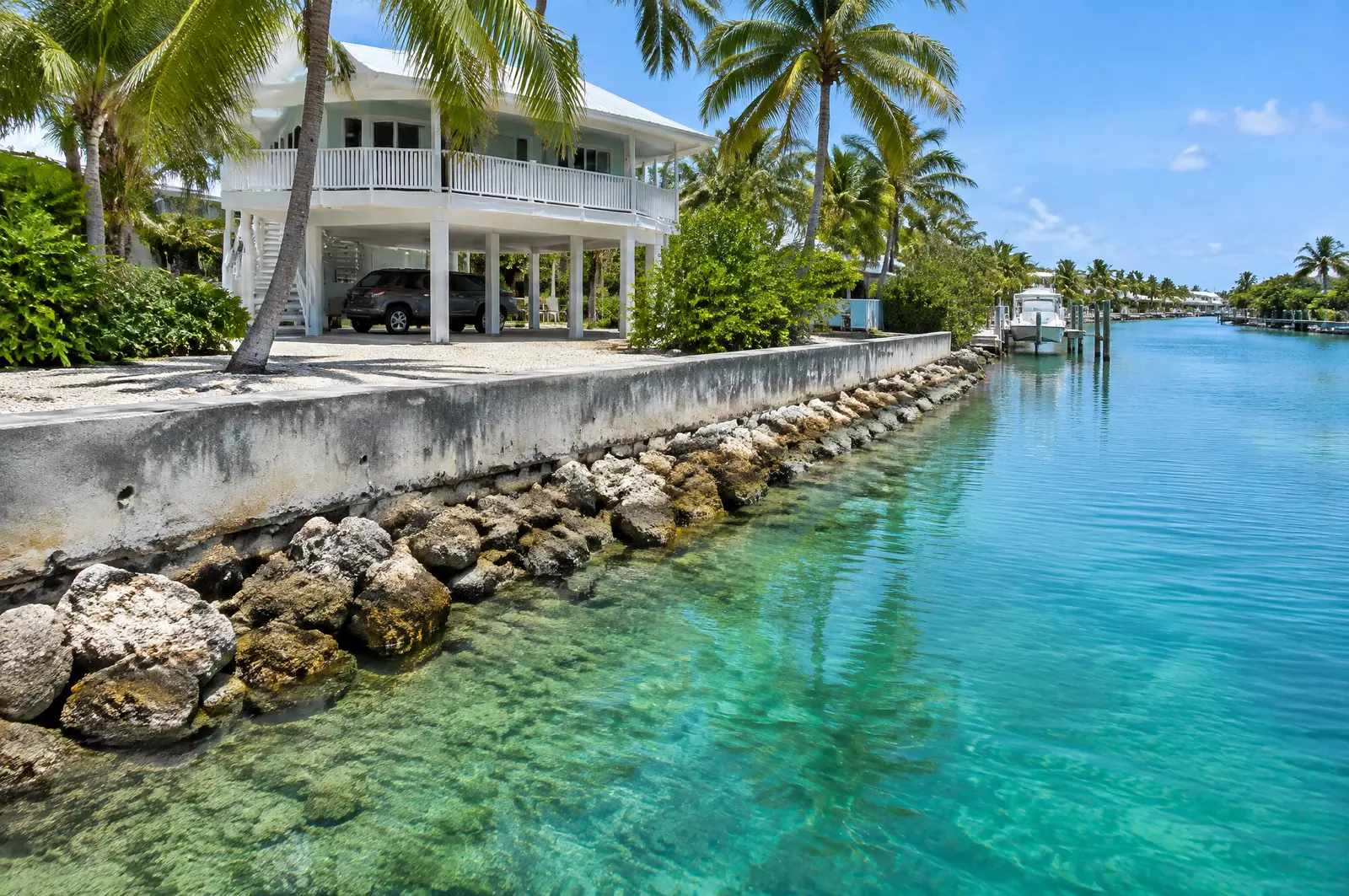
Sanctuary, seagrass and manatees
Projects inside the Florida Keys National Marine Sanctuary needed prior Sanctuary approval under SPGP VI. The same permit let boat lifts and minor structures in Monroe County go into existing boat slips without a seagrass survey. All in-water work follows the state manatee conditions.[5][6]
Permits in Key Largo
- Monroe County Planning and Environmental Resources Department: Dock length special exceptions under County Code section 118-12(m)(15).
- Florida Keys National Marine Sanctuary: The Sanctuary starts at mean high water, so Key Largo canal and bay work is inside it; SPGP VI required its prior approval.
- Florida DEP or South Florida Water Management District: State permit or exemption, which Monroe County needs to see before it issues a Notice to Proceed for docks, seawalls and ramps.
- US Army Corps of Engineers, Jacksonville District: Federal permit, also required before the County's Notice to Proceed.
Which dock repairs need a permit?
Miami-Dade DERM exempts replacing decking or handrails to the original dimensions, removing old piles and dilapidated docks, and replacing fender or mooring piles in the same spot when a contractor with a certificate of competency gives DERM 24 hours' notice. Anything that changes the footprint needs a permit. Your city may still need a building permit.[9]
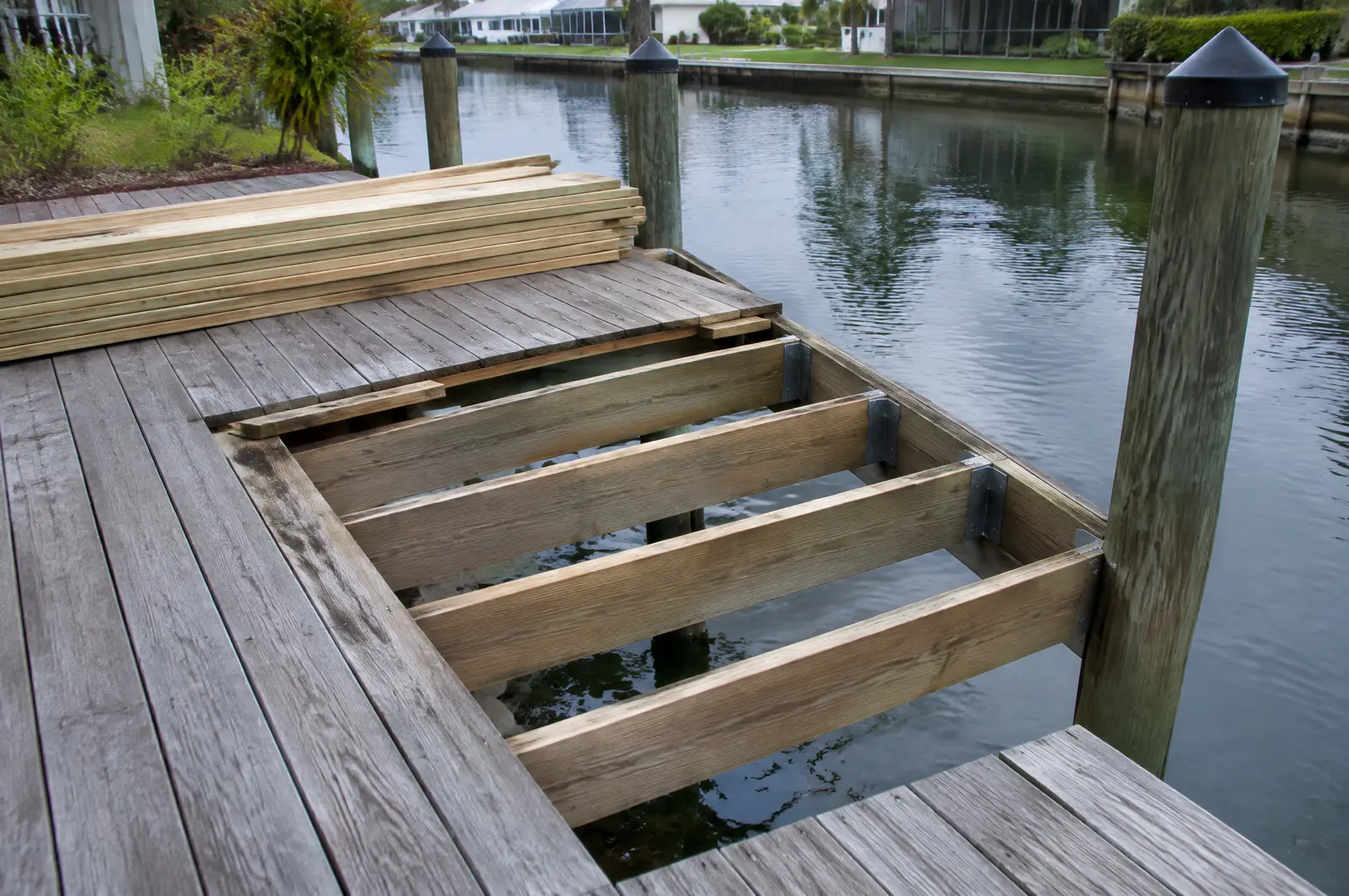
Repair or rebuild?
If the pilings are sound, new decking and framing are usually good value. If many pilings are failing, a rebuild within 5 ft of the old footprint keeps the state exemption and is often the better long-term choice.[10]
| Item | Figure | Source and scope |
|---|---|---|
| Dock repair | $3 to $250 per sq ft, by material | Fixr, national, 2025 |
| Replacing a piling | $300 to $1,600 each | Fixr, national, 2025 |
| Removing a dock before replacement | $250 to $1,000 | Fixr, national, 2025 |
Frequently asked questions
How long can a dock be in Key Largo?
A pier dock can be no longer than twice the shoreline frontage or 100 ft, whichever is less. Longer needs a Dock Length Special Exception ($1,450 plus $3 per nearby shoreline owner).
What pilings can I use in Key Largo?
Non-CCA-leaching piles such as recycled plastic or concrete, or treated piles wrapped in a sleeve of at least 30 mil from 6 in below the bottom to 2 ft above mean high water.
Is my Key Largo canal inside the marine sanctuary?
Yes. The Sanctuary's shoreward boundary is the mean high water mark, so in-water work is inside it and needs the matching state and federal approvals.
Sources
- Monroe County Land Development Code, Sec. 118-12 Shoreline Setback, subsections (k) Bulkheads, seawalls and riprap and (m) Docking facilities (third-party code copy), Monroe County, Florida (text reproduced by Zoneomics; the official Municode copy blocked automated access). Accessed October 28, 2026.
- Dock Length Special Exception Application (Last revised August 2026), Monroe County Planning and Environmental Resources Department. Accessed October 27, 2026.
- Florida Keys National Marine Sanctuary, Florida Department of Environmental Protection, Office of Resilience and Coastal Protection. Accessed October 28, 2026.
- Manatee Data and Maps (county manatee protection zone and boating restricted area maps), Florida Fish and Wildlife Conservation Commission (FWC). Accessed October 28, 2026.
- Department of the Army State Programmatic General Permit VI (SPGP VI), SAJ-2015-2575, State of Florida, U.S. Army Corps of Engineers, Jacksonville District (document hosted by Florida DEP). Accessed October 27, 2026.
- Standard Manatee Conditions for In-Water Work (2011), Florida Fish and Wildlife Conservation Commission (FWC). Accessed October 27, 2026.
- Community Rating System (CRS), Monroe County, Florida. Accessed October 28, 2026.
- Cost to Build a Dock (updated 31 Jan 2025), Fixr.com (secondary national cost guide). Accessed October 27, 2026.
- Class I Permit Application for Coastal Construction and Mangrove Trimming within Miami-Dade County (Revised May 2025), Miami-Dade County RER, Division of Environmental Resources Management (DERM), Coastal Resources Section. Accessed October 27, 2026.
- Florida Statutes 2026, Section 403.813: Permits issued at district centers; exceptions, The Florida Legislature (Online Sunshine). Accessed October 27, 2026.
Get a free quote
Tell us about your project and we will get back to you fast.