
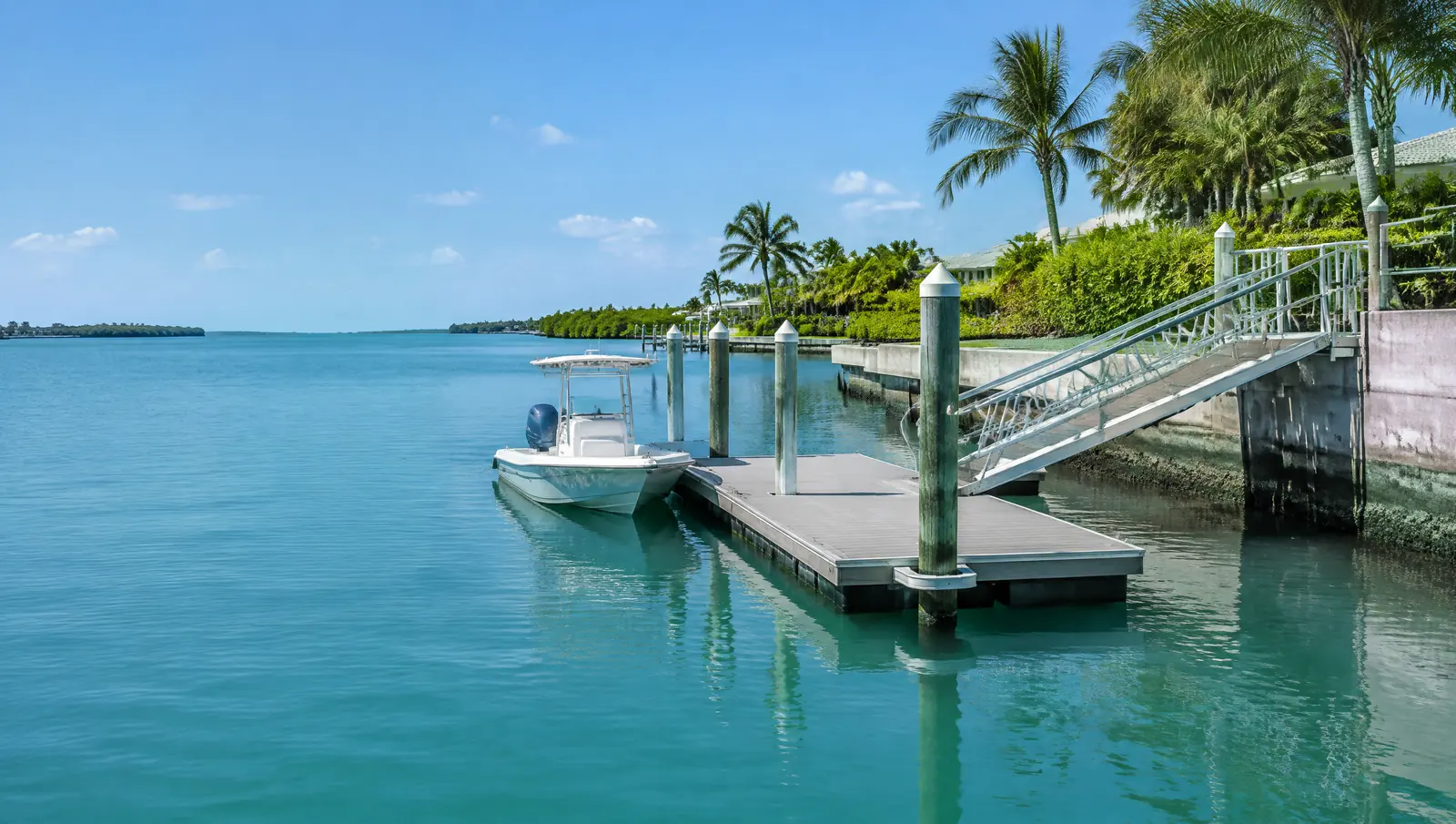
Floating docks in Key Largo
Floating docks in Key Largo, where floats need 4 ft of water at low tide.
Free Fast Quote
Please fill out this form to request a free quote on your upcoming project and we will respond to you right away!
Floating docks suit deep water, big tidal ranges and owners who want an easy step on and off the boat. We install the floats, anchoring and gangway.
- Free, no-obligation quote
- Fast response from our team
- Miami-Dade, Broward, Palm Beach and the Keys
The short answer
Floating docks and lifts in Key Largo need 4 ft of water at mean low water and must stay off seagrass and out of manatee zones. Key Largo docks must reach 4 ft of water at mean low water, and over seagrass the deck must sit 5 ft above mean high water with a platform no larger than 160 sq ft.
Last updated
Who a floating dock suits
Owners with deep water at the wall, frequent wakes, a small boat, kayaks or a jet ski, or a seawall too high for an easy step down.
Typical project sizes
Most residential floating docks are a single platform with a gangway, comfortably under the 500 sq ft state exemption for floating platforms.
Floating lifts and docks need deep water
Floats are allowed in Key Largo only over water at least 4 ft deep at mean low water. Floating lifts and vessel platforms must also stay off benthic resources and out of manatee zones, be secured to a fixed dock, and keep the whole structure within 25% of the navigable width.
A floating dock needs that water under it at low tide, or the floats sit on the bottom.[1]
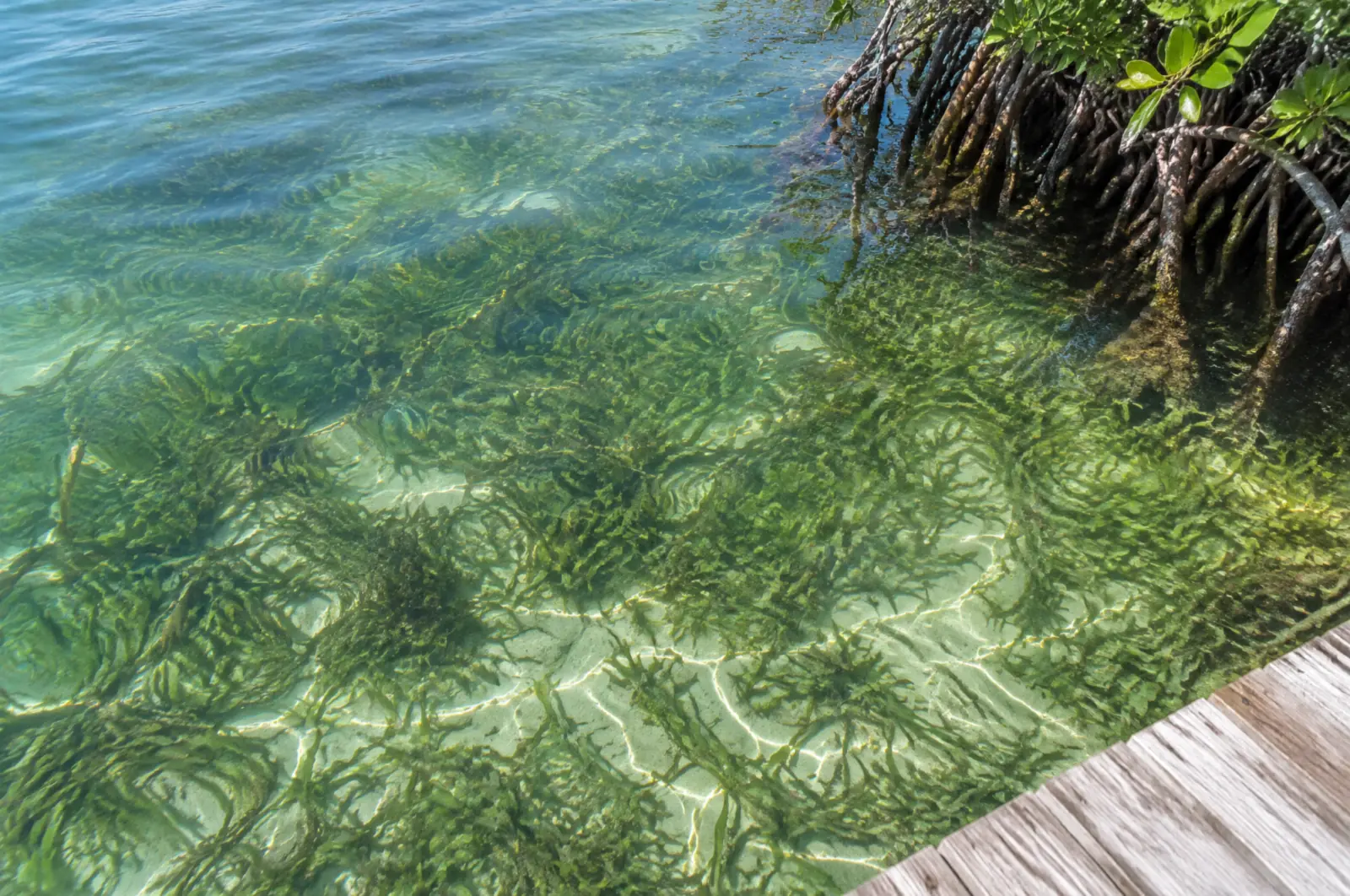
Four feet of water, and more over grass
A Key Largo dock must end in at least 4 ft of water at mean low water. Over seagrass or hard bottom, the water must be 4 ft deep above the organisms, the deck at least 5 ft above mean high water, and the terminal platform no larger than 160 sq ft (8 by 20 ft), with a benthic survey to prove it.
Floats shade the bottom, so they are kept off seagrass.[1]
Ocean side tide at Rock Harbor
NOAA's Rock Harbor station on the Atlantic side of Key Largo records a 2.09 ft mean range and a 2.37 ft great diurnal range, with mean higher high water about 0.25 ft above NAVD 88 (1983 to 2001 epoch). There is no NOAA datum station on the bay side near Key Largo, so for bay side lots we measure the water on site.
Floats, guide piles and gangway length are sized from that range so the gangway stays walkable at low water.[2]
What makes Key Largo different
The special exception application asks owners to describe the submerged lands the dock crosses, such as sand, seagrass or coral, and the minimum extra length needed to reach adequate water depth. The site plan must be prepared by a Florida registered architect, engineer or landscape architect and show the mean high water line and shoreline setbacks.[3]
Sanctuary, seagrass and manatees
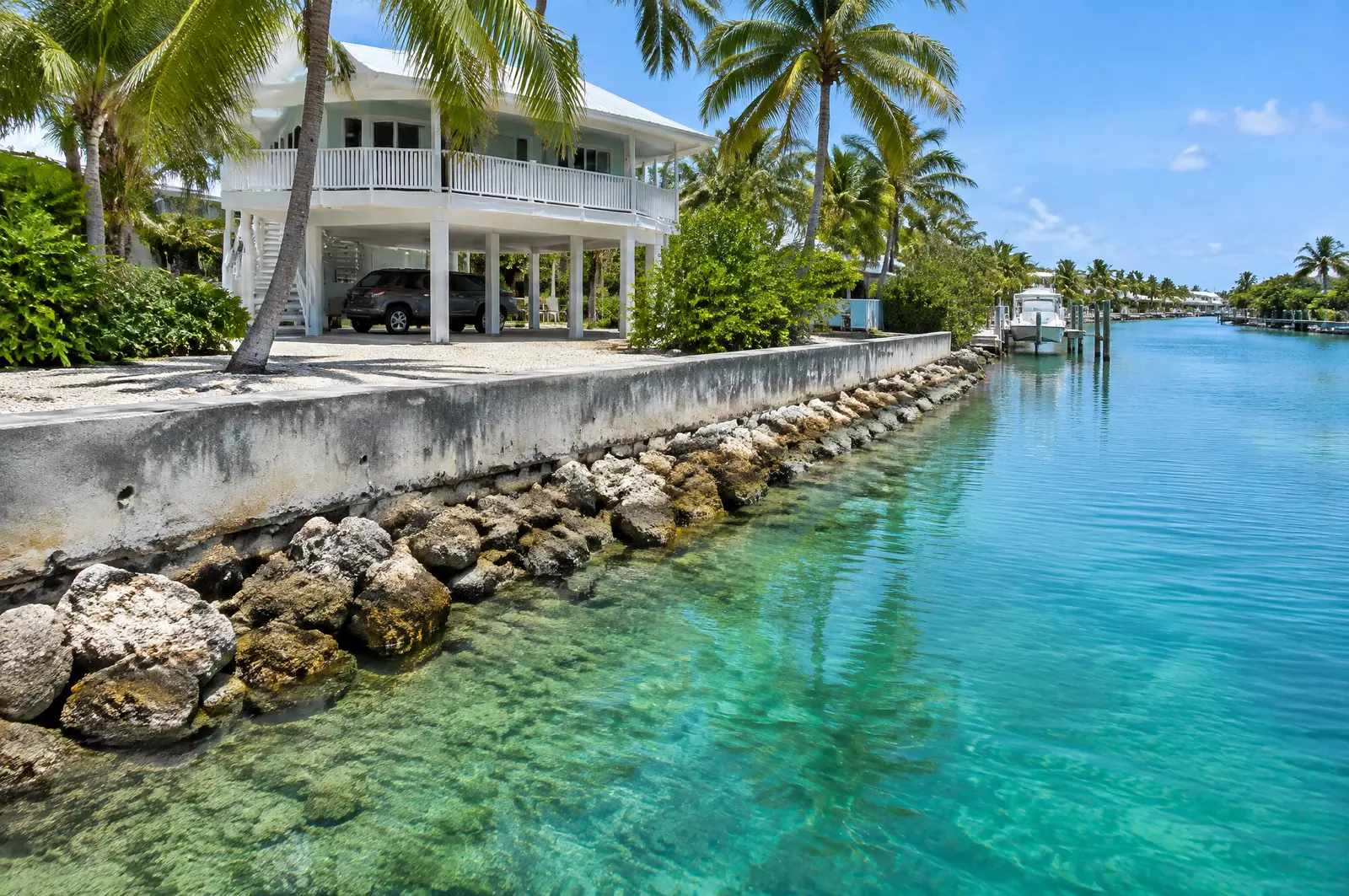
Projects inside the Florida Keys National Marine Sanctuary needed prior Sanctuary approval under SPGP VI. The same permit let boat lifts and minor structures in Monroe County go into existing boat slips without a seagrass survey. All in-water work follows the state manatee conditions.[4][5]
Permits in Key Largo
- Monroe County Planning and Environmental Resources Department: Dock length special exceptions under County Code section 118-12(m)(15).
- Florida Keys National Marine Sanctuary: The Sanctuary starts at mean high water, so Key Largo canal and bay work is inside it; SPGP VI required its prior approval.
- Florida DEP or South Florida Water Management District: State permit or exemption, which Monroe County needs to see before it issues a Notice to Proceed for docks, seawalls and ramps.
- US Army Corps of Engineers, Jacksonville District: Federal permit, also required before the County's Notice to Proceed.
Do you need a permit for a floating dock?
Usually yes, at county and city level. Florida's exemptions cover private docks on pilings or floating up to 1,000 sq ft and floating vessel platforms up to 500 sq ft, but they do not remove county and municipal requirements. In Miami-Dade any structure over tidal water needs a DERM Class I permit.[7][8]
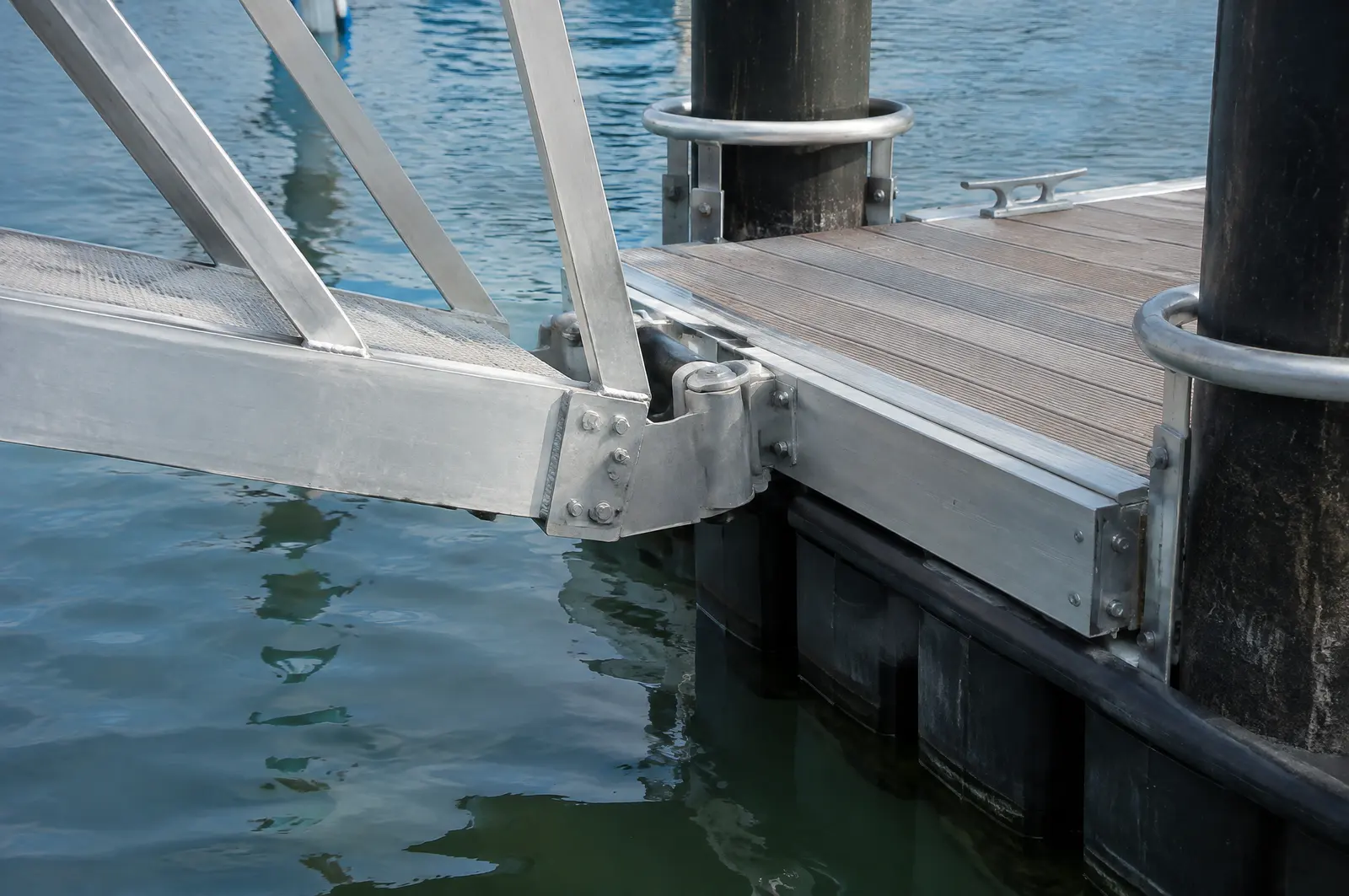
What goes into the install
- Float sections and decking
- Anchoring to pilings or the seawall
- Aluminium gangway with hinges for the tidal range
- Cleats, bumpers and lighting
Frequently asked questions
Are floating lifts allowed in Key Largo?
Yes, in at least 4 ft of water at mean low water, not over benthic resources or in manatee zones, attached to a fixed dock and within 25% of the navigable width.
Can I build a dock over seagrass in Key Largo?
Only if there is 4 ft of water above the grass at mean low water, the deck is at least 5 ft above mean high water and the platform is no larger than 160 sq ft, backed by a benthic survey.
How much tide is there in Key Largo?
On the Atlantic side, NOAA's Rock Harbor gauge shows a 2.09 ft mean range and a 2.37 ft great diurnal range. On the bay side we measure on site.
Sources
- Monroe County Land Development Code, Sec. 118-12 Shoreline Setback, subsections (k) Bulkheads, seawalls and riprap and (m) Docking facilities (third-party code copy), Monroe County, Florida (text reproduced by Zoneomics; the official Municode copy blocked automated access). Accessed October 28, 2026.
- Datums for station 8723689, Rock Harbor, Key Largo (tidal epoch 1983 to 2001), NOAA Center for Operational Oceanographic Products and Services (CO-OPS), Tides and Currents. Accessed October 28, 2026.
- Dock Length Special Exception Application (Last revised August 2026), Monroe County Planning and Environmental Resources Department. Accessed October 27, 2026.
- Department of the Army State Programmatic General Permit VI (SPGP VI), SAJ-2015-2575, State of Florida, U.S. Army Corps of Engineers, Jacksonville District (document hosted by Florida DEP). Accessed October 27, 2026.
- Standard Manatee Conditions for In-Water Work (2011), Florida Fish and Wildlife Conservation Commission (FWC). Accessed October 27, 2026.
- Community Rating System (CRS), Monroe County, Florida. Accessed October 28, 2026.
- Florida Statutes 2026, Section 403.813: Permits issued at district centers; exceptions, The Florida Legislature (Online Sunshine). Accessed October 27, 2026.
- Class I Permit Application for Coastal Construction and Mangrove Trimming within Miami-Dade County (Revised May 2025), Miami-Dade County RER, Division of Environmental Resources Management (DERM), Coastal Resources Section. Accessed October 27, 2026.
Get a free quote
Tell us about your project and we will get back to you fast.