
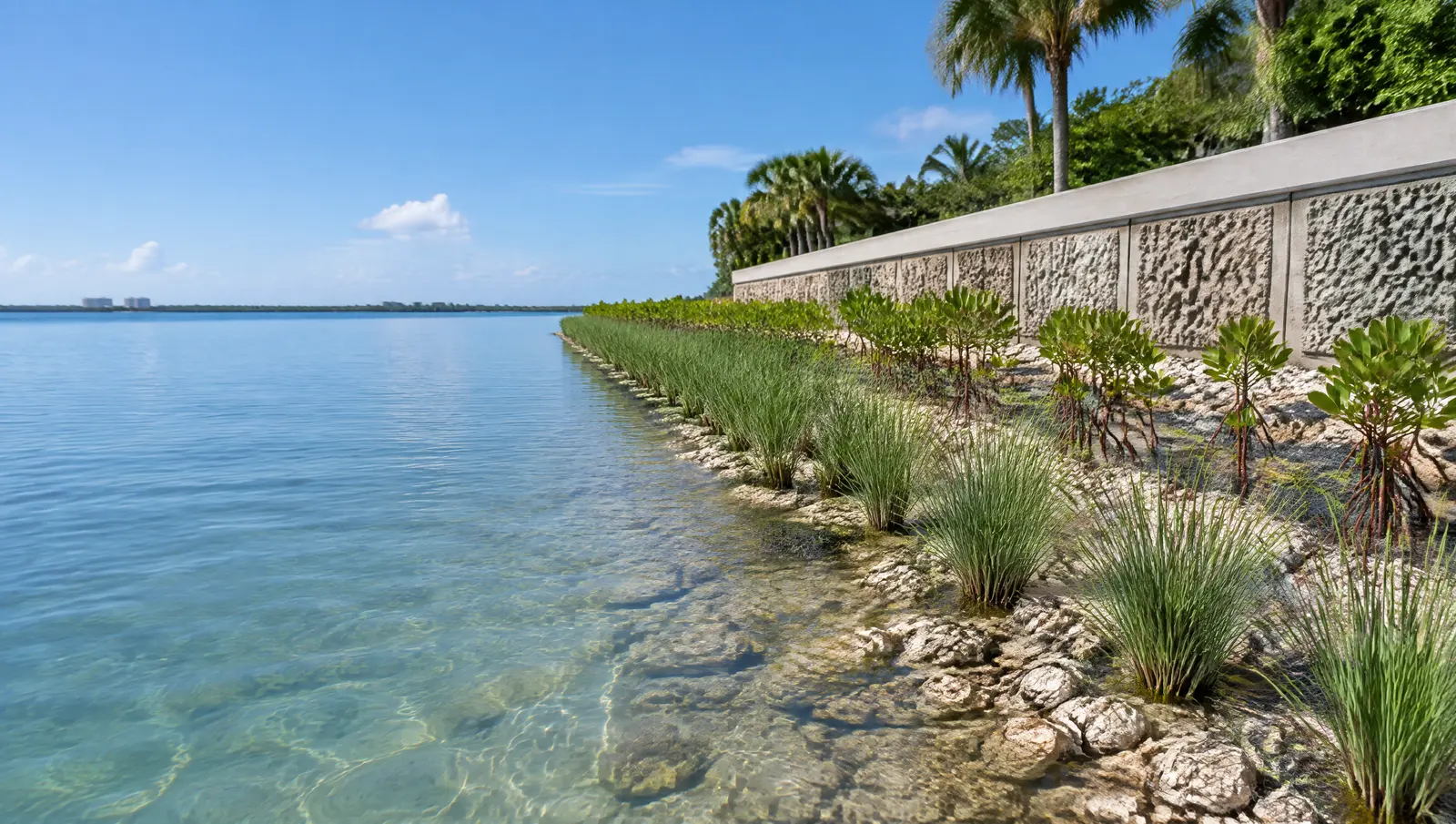
Living shorelines in Islamorada
Living shorelines in Islamorada, where erosion-control walls are exempt from the shoreline setback.
Free Fast Quote
Please fill out this form to request a free quote on your upcoming project and we will respond to you right away!
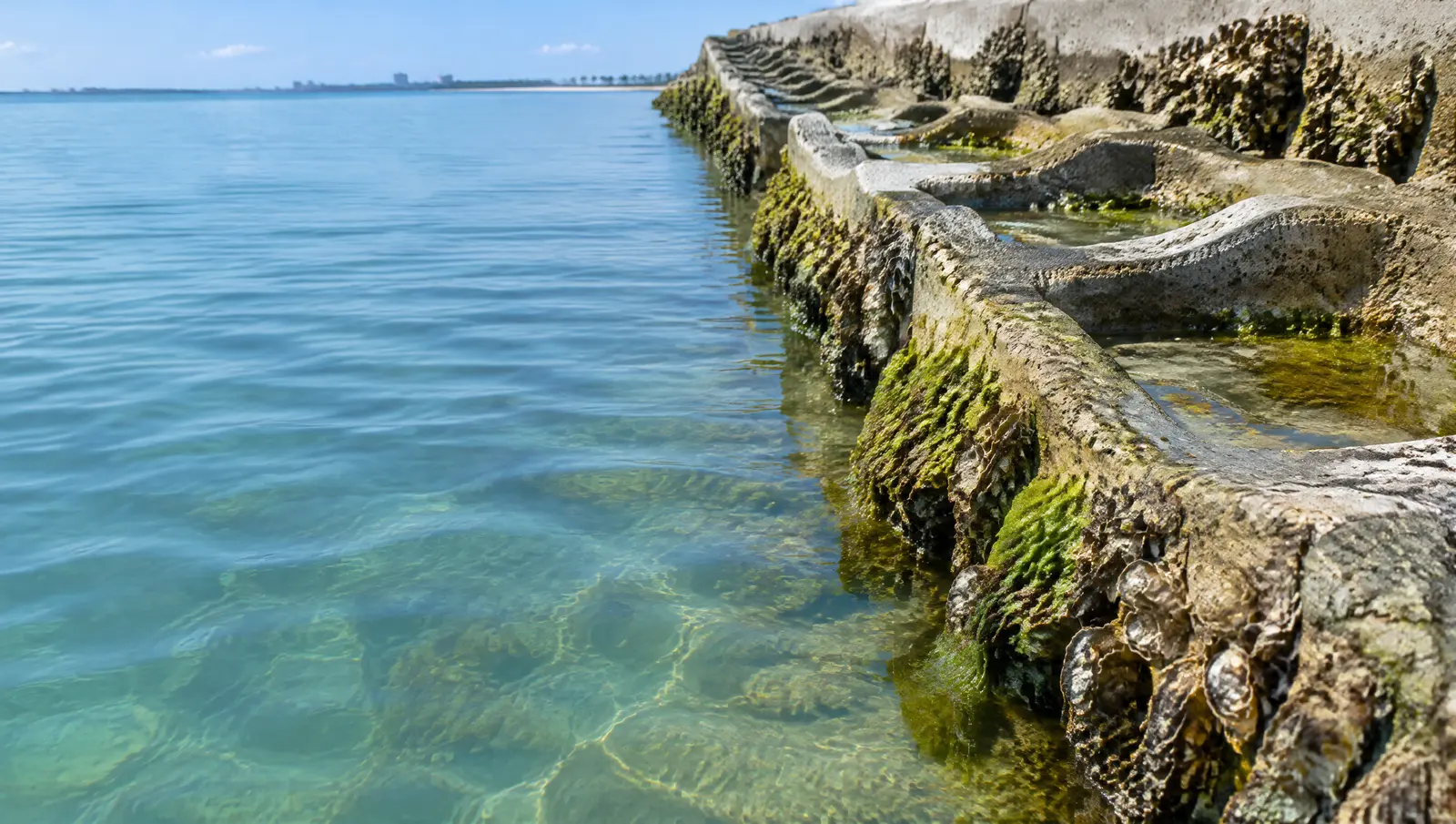
Riprap planted with mangroves in front of a wall, and seawalls with textured, pH-neutral panels that marine life can grow on.
- Free, no-obligation quote
- Fast response from our team
- Miami-Dade, Broward, Palm Beach and the Keys
The short answer
Islamorada's 20 to 50 ft shoreline setback does not apply to seawalls, riprap or bulkheads built for erosion control. Part of Islamorada's water is the 6,700 acre Lignumvitae Key Aquatic Preserve, where seagrass meadows and the 500 sq ft dock exemption shape every dock.
Last updated
Who this is for
Owners replacing a wall who want a softer edge, owners with mangroves along the shore, and Coral Gables owners who want the fee incentive.
Seawalls and riprap inside the setback
Islamorada's shoreline setback keeps buildings 20 to 50 ft from mean high water, but it does not apply to seawalls, riprap and bulkheads whose purpose is erosion control or upland protection. Because the Keys are an area of critical state concern, the 2024 ordinance was approved by the Florida Department of Commerce.
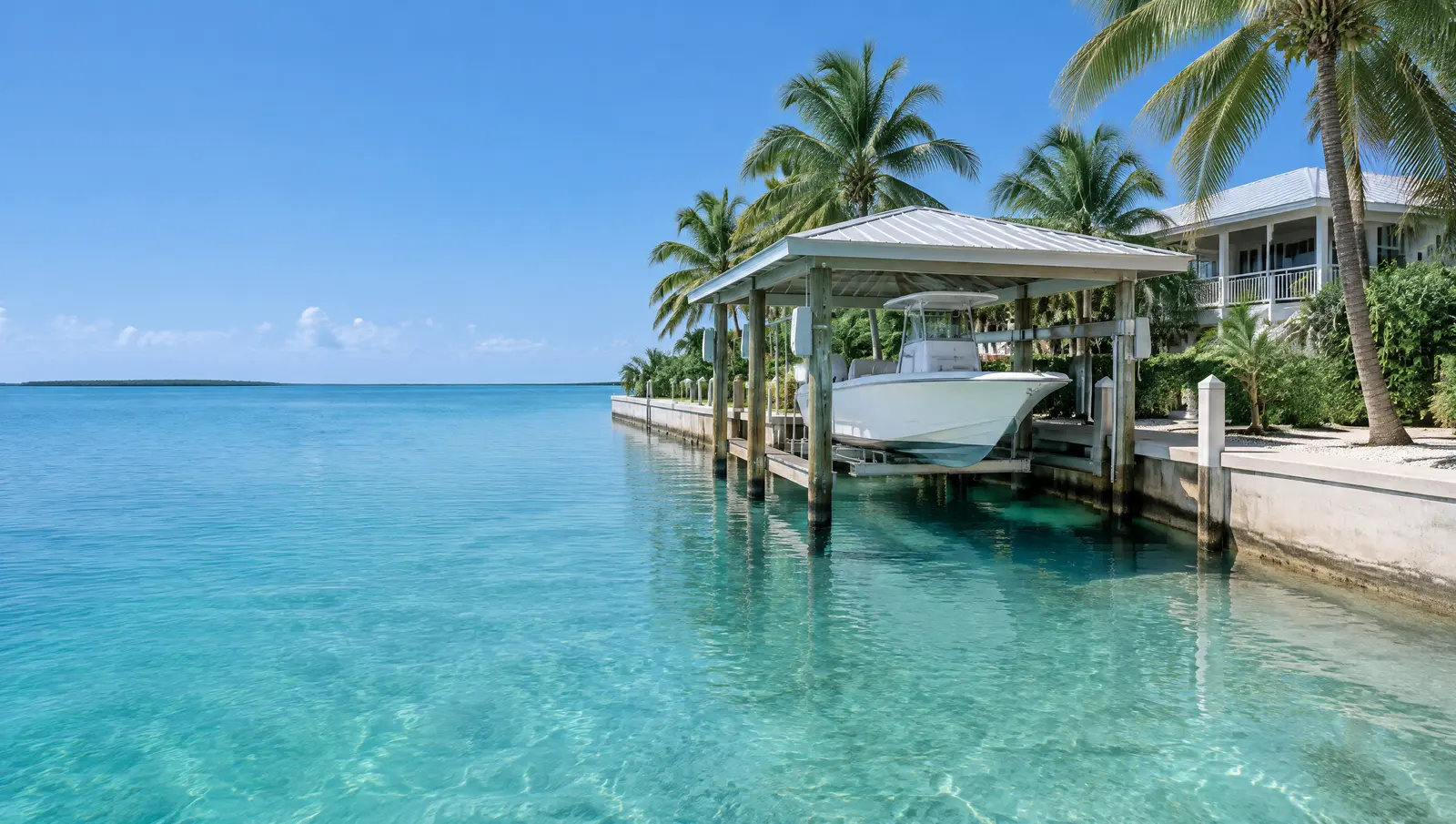
A living shoreline is built on that rock rule, with plants and habitat panels added.[1]
The Lignumvitae Key Aquatic Preserve
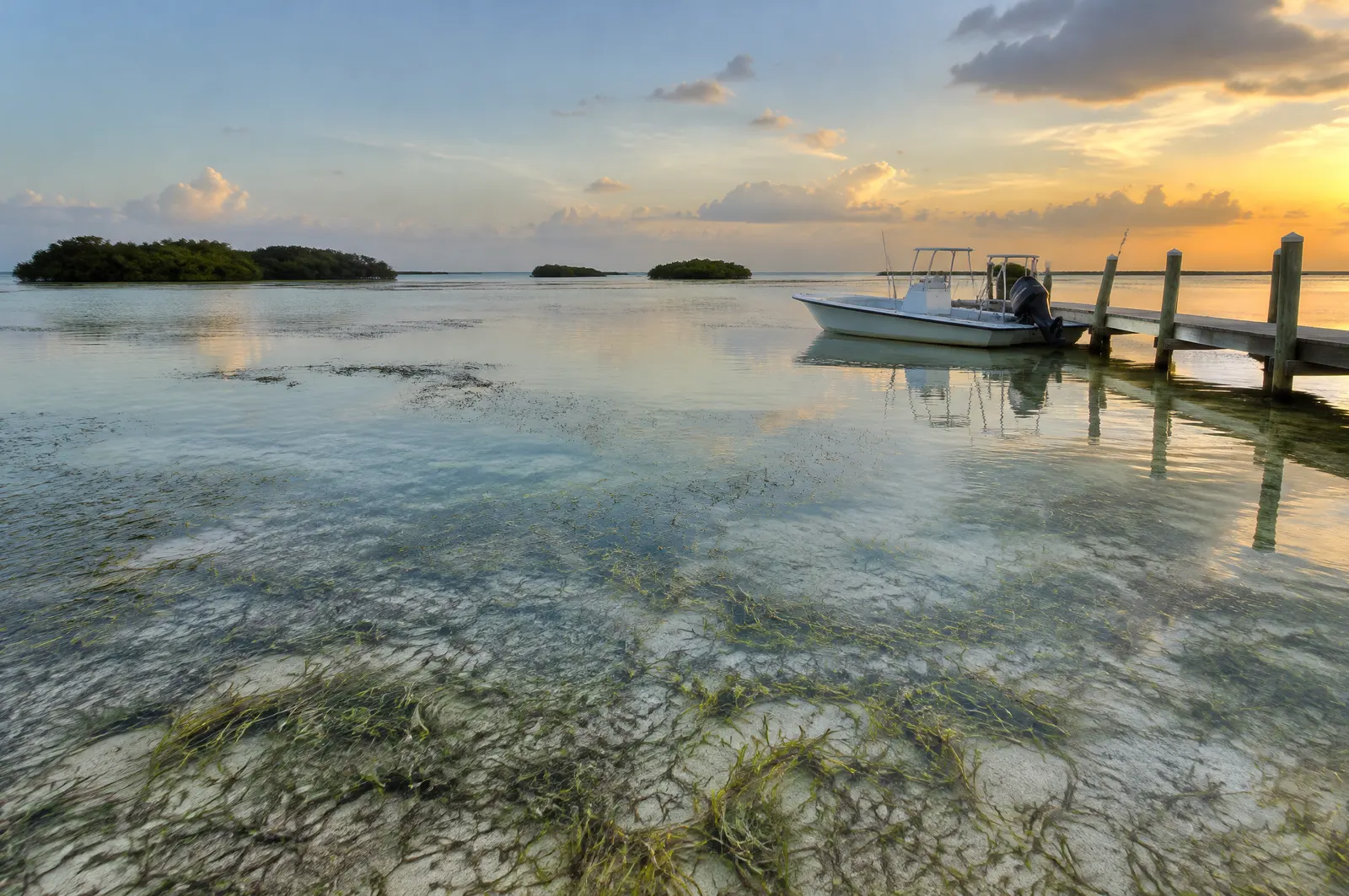
The 6,700 acre Lignumvitae Key Aquatic Preserve lies inside the Village between Upper and Lower Matecumbe Keys, with seagrass meadows and three navigable channels between Florida Bay and the Atlantic. It is recognised as an outstanding water resource of the state, which brings the smaller 500 sq ft dock exemption used for Outstanding Florida Waters.
No tying up to mangroves
Islamorada bans docking, mooring or tying a vessel to shoreline vegetation, mangroves included, except in a declared emergency. A boat needs a proper dock or piling to tie to, which is often the reason a new dock or mooring pile is the first project on a natural shoreline lot.
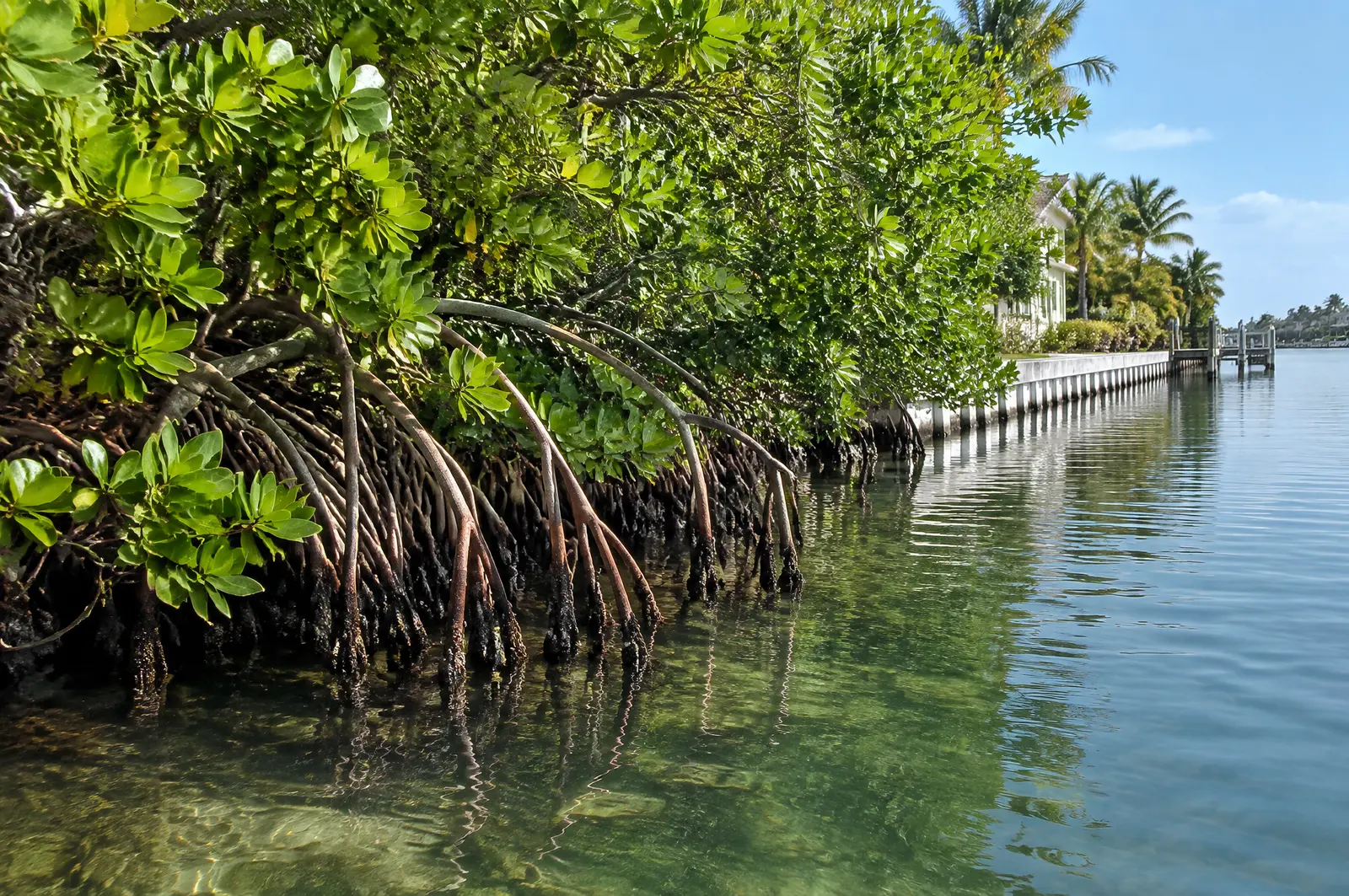
Mangroves are the backbone of a living shoreline here, so the rules on them shape the design.[1]
What makes Islamorada different
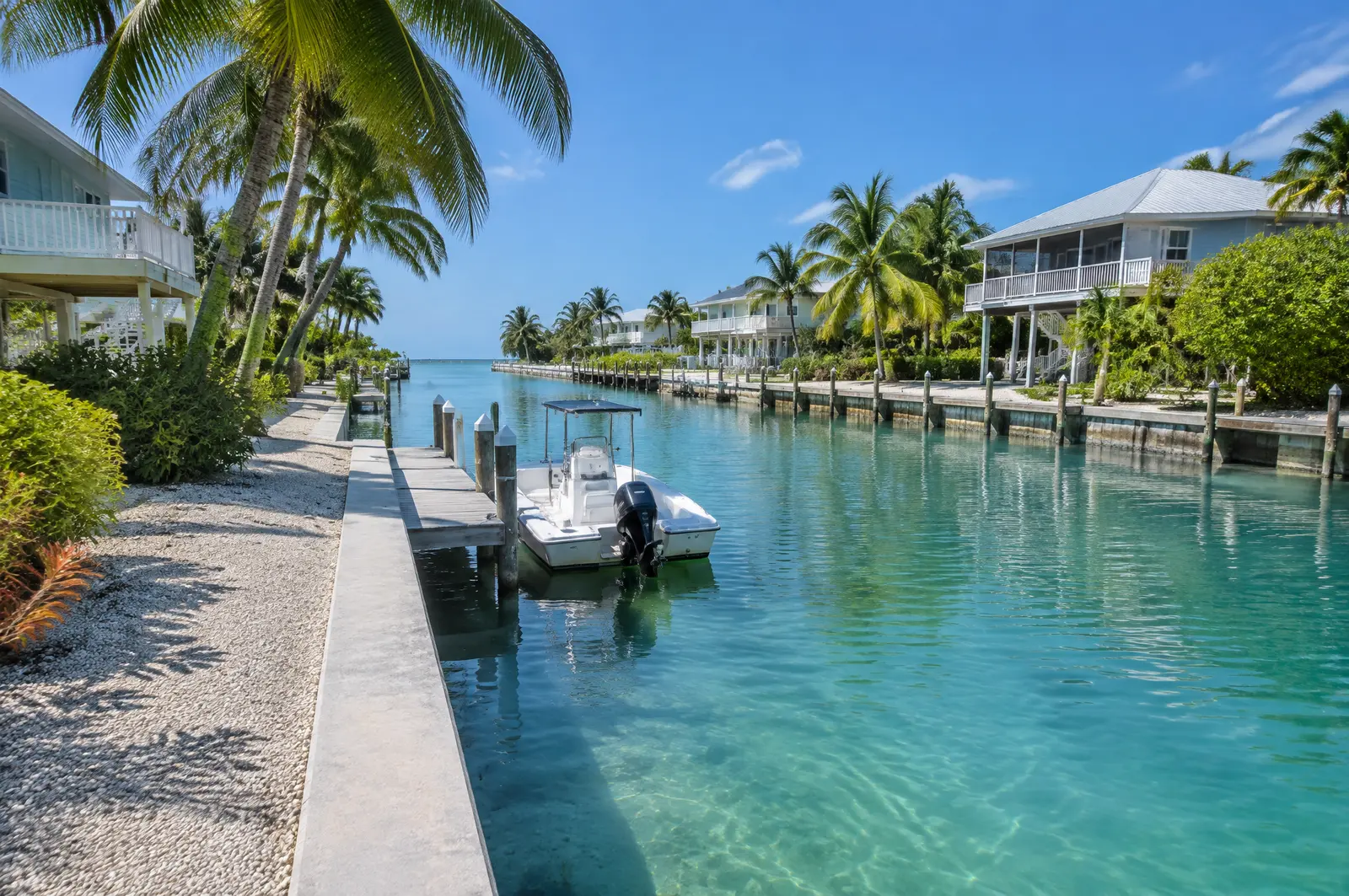
Principal buildings sit 20 ft from the mean high water line on altered shorelines such as canals, 30 ft on open water with conditions, and 50 ft on unaltered shorelines. Docks, lifts, davits, seawalls and riprap are water-dependent structures that may sit inside that setback under the Village's standards.[1]
Sanctuary and manatee layers
The federal small-project permit, SPGP VI, required Sanctuary sign-off before any Islamorada project in Keys waters, and crews follow the state manatee conditions on every in-water job.[4][5]
Permits in Islamorada
- Islamorada, Village of Islands, Planning and Development Services: Docks, lifts and shoreline structures under Village Code Chapter 30.
- Florida Keys National Marine Sanctuary: Sanctuary waters surround every Islamorada key from the mean high water mark; we confirm what Sanctuary approval each project needs.
- Florida DEP or South Florida Water Management District: State permit or exemption; part of the Village's water is the Lignumvitae Key Aquatic Preserve.
- US Army Corps of Engineers, Jacksonville District: Federal authorisation for work in the Sanctuary waters around the Village.
Permits for living shorelines
Riprap follows the riprap rules: up to 10 ft waterward under SPGP VI and a state general permit for up to 100 linear feet at 2:1. In Miami-Dade, mangrove permits are valid for 3 years and limerock boulder riprap on a 2:1 slope gets an expedited authorisation after a DERM inspection.[4][10]
Frequently asked questions
Does the shoreline setback stop seawall work in Islamorada?
No. The setback does not apply to seawalls, riprap and bulkheads whose purpose is erosion control or protecting the upland.
Is Islamorada water protected?
Much of it. The Lignumvitae Key Aquatic Preserve covers 6,700 acres inside the Village, and all Keys water is inside the National Marine Sanctuary.
Can I tie my boat to the mangroves in Islamorada?
No. Ordinance 24-15 bans docking, mooring or tying up to shoreline vegetation, including mangroves, except in a declared emergency.
Sources
- Ordinance No. 24-15 amending Village Code Sec. 30-1542 Shoreline Setback, with Department of Commerce Final Order COM-24-043, Islamorada, Village of Islands. Accessed October 28, 2026.
- Lignumvitae Key Aquatic Preserve, Florida Department of Environmental Protection, Office of Resilience and Coastal Protection. Accessed October 28, 2026.
- Florida Statutes 2026, Section 403.813: Permits issued at district centers; exceptions, The Florida Legislature (Online Sunshine). Accessed October 27, 2026.
- Department of the Army State Programmatic General Permit VI (SPGP VI), SAJ-2015-2575, State of Florida, U.S. Army Corps of Engineers, Jacksonville District (document hosted by Florida DEP). Accessed October 27, 2026.
- Standard Manatee Conditions for In-Water Work (2011), Florida Fish and Wildlife Conservation Commission (FWC). Accessed October 27, 2026.
- Datums for station 8723808, Islamorada, Upper Matecumbe Key, Florida Bay (tidal epoch 1983 to 2001), NOAA Center for Operational Oceanographic Products and Services (CO-OPS), Tides and Currents. Accessed October 28, 2026.
- Datums for station 8723814, Upper Matecumbe Key, Hawk Channel (tidal epoch 1983 to 2001), NOAA Center for Operational Oceanographic Products and Services (CO-OPS), Tides and Currents. Accessed October 28, 2026.
- Floodplain Management, Islamorada, Village of Islands, Building Department. Accessed October 28, 2026.
- Solar, Open Air Dining, and Other Permits, City of Coral Gables. Accessed October 27, 2026.
- Class I Permit Application for Coastal Construction and Mangrove Trimming within Miami-Dade County (Revised May 2025), Miami-Dade County RER, Division of Environmental Resources Management (DERM), Coastal Resources Section. Accessed October 27, 2026.
Get a free quote
Tell us about your project and we will get back to you fast.