
Living shorelines in Miami
Living shorelines for Miami homes, placed to DERM's 10 ft riprap limit.
Free Fast Quote
Please fill out this form to request a free quote on your upcoming project and we will respond to you right away!
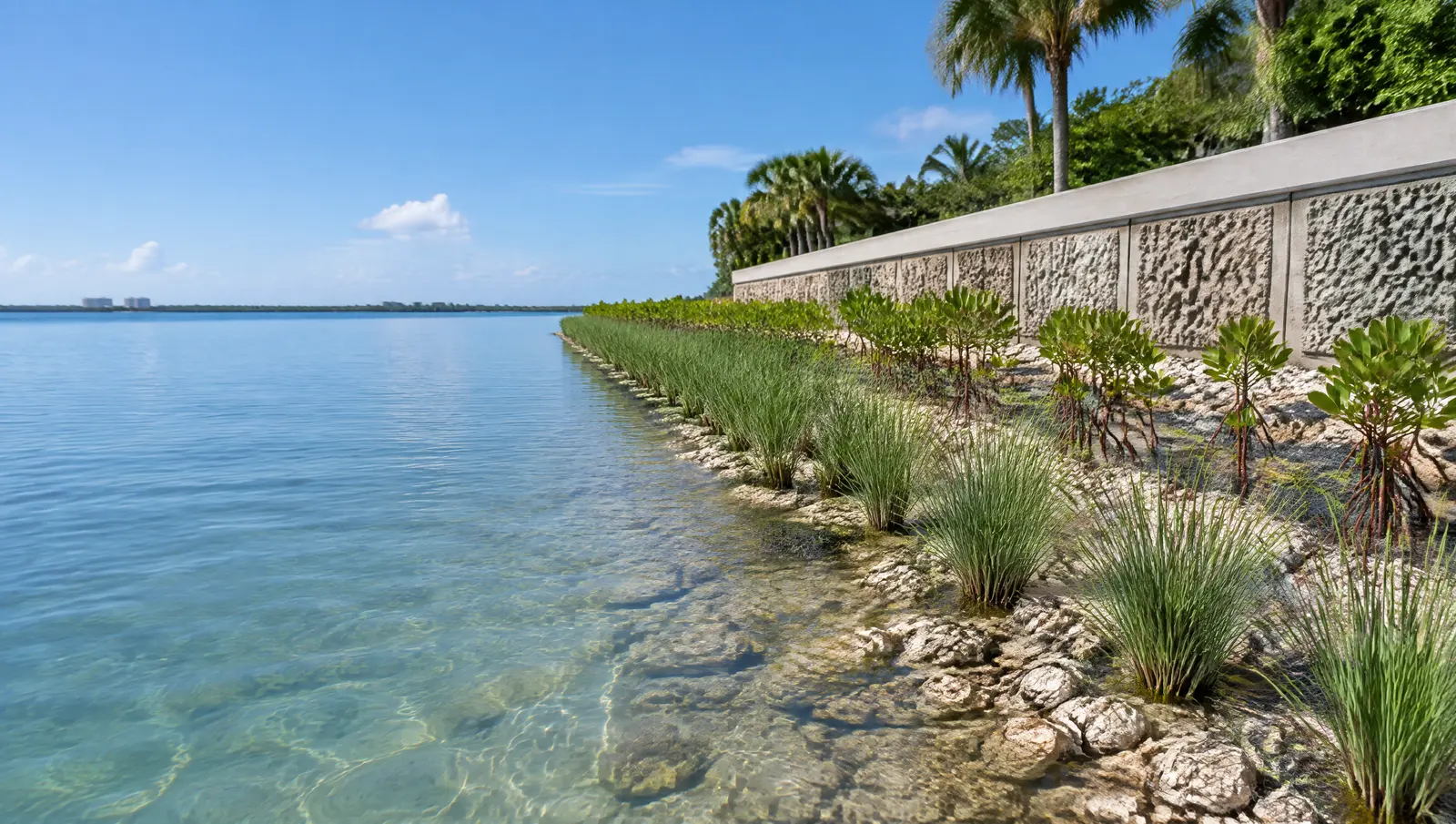
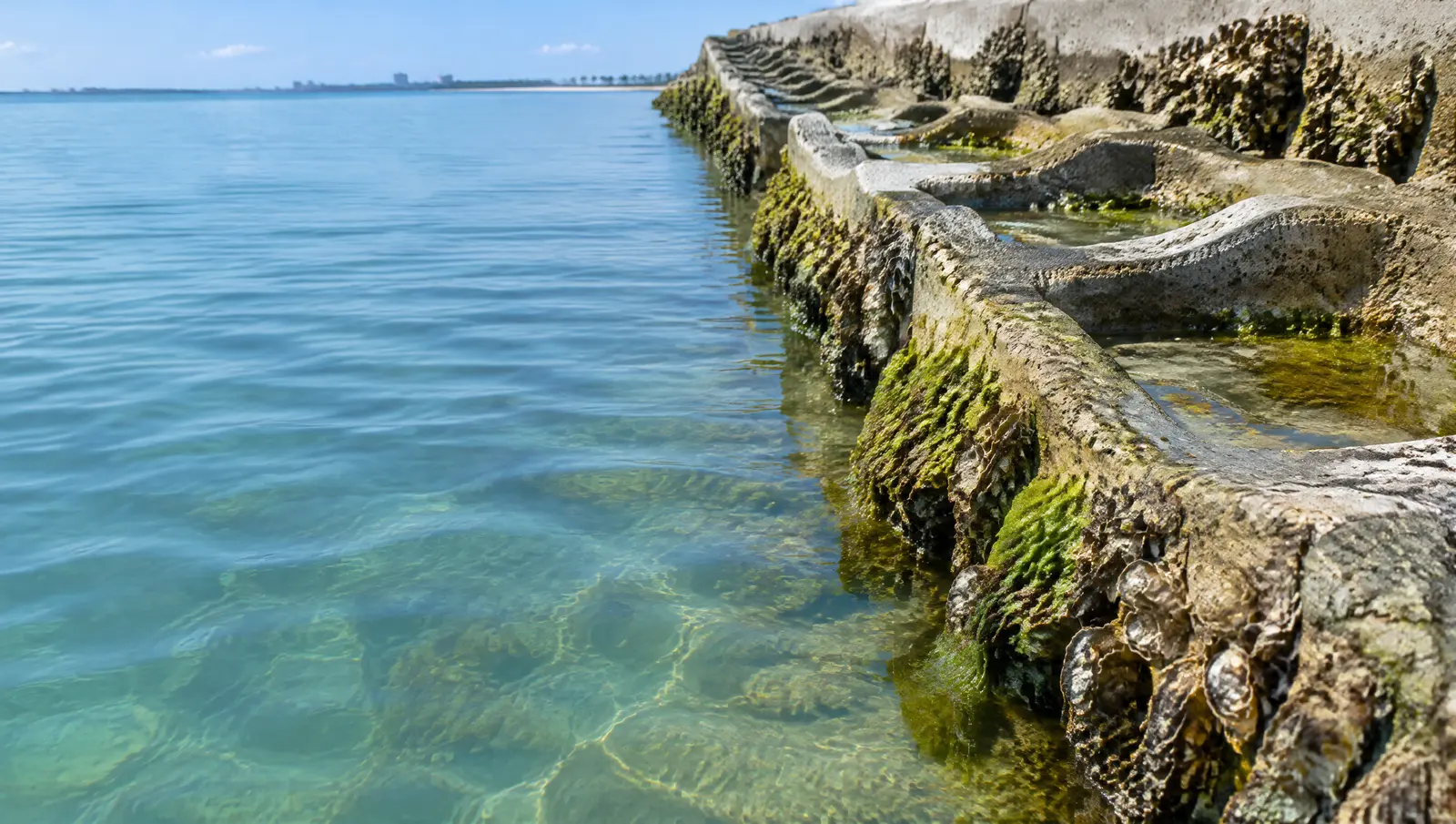
Riprap planted with mangroves in front of a wall, and seawalls with textured, pH-neutral panels that marine life can grow on.
- Free, no-obligation quote
- Fast response from our team
- Miami-Dade, Broward, Palm Beach and the Keys
The short answer
Miami's bayfront sits in the Biscayne Bay Aquatic Preserve, so an exempt private dock is capped at 500 sq ft over the water instead of the 1,000 sq ft allowed on artificial canals. In Miami, riprap up to 10 ft waterward of mean high water on a 2:1 slope gets DERM's expedited authorisation after a $170 inspection.
Last updated
Who this is for
Owners replacing a wall who want a softer edge, owners with mangroves along the shore, and Coral Gables owners who want the fee incentive.
Riprap rules on Miami's bay and river edges
DERM treats limerock boulders on a 2:1 slope no more than 10 ft waterward of mean high water as an expedited job once its staff have inspected the site, with a $170 riprap inspection fee. Riprap tucked under an undercut wall no more than 2 ft out is exempt, which covers many first repairs.
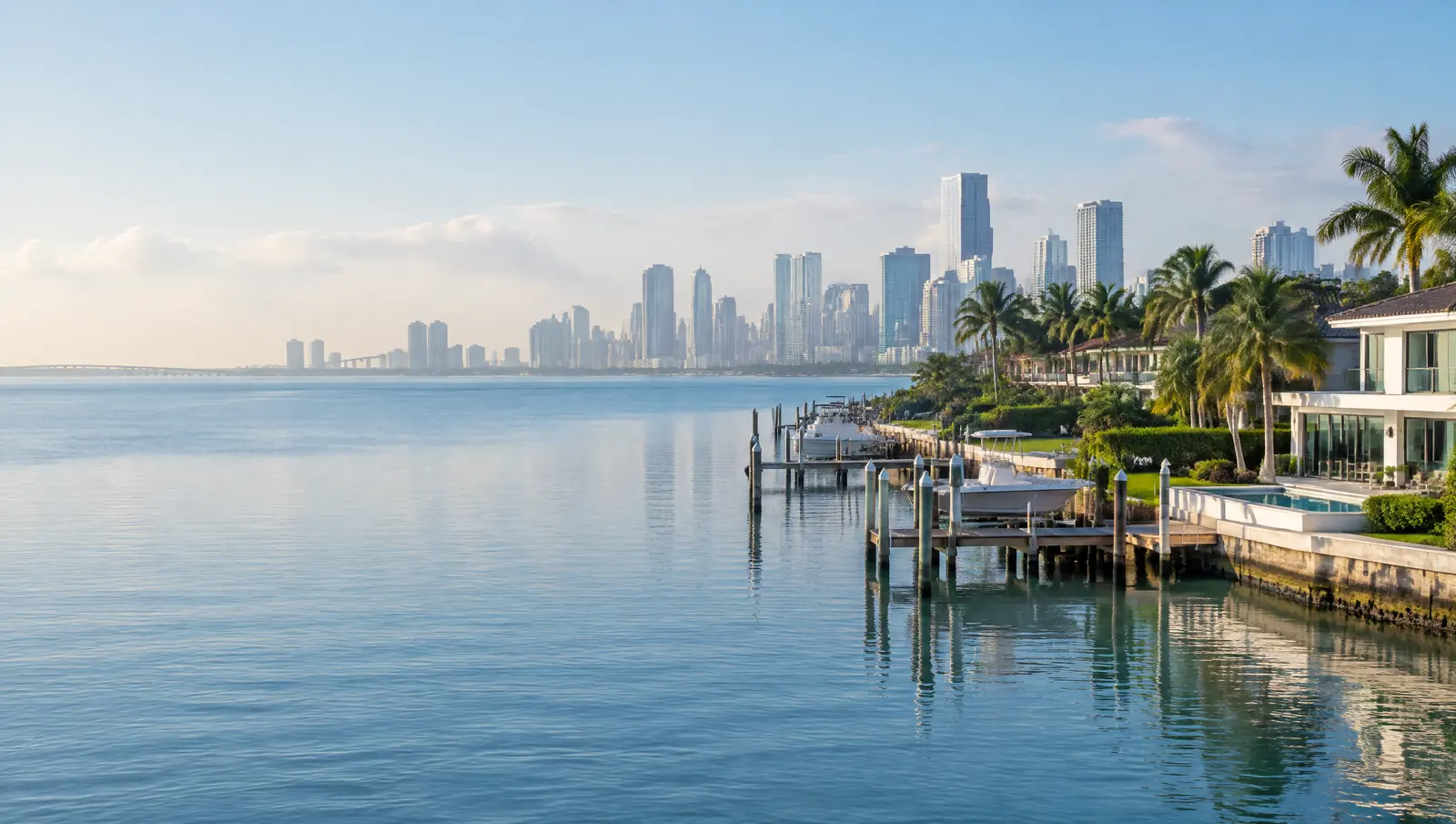
A living shoreline is built on that rock rule, with plants and habitat panels added.[1]
Bayfront lots sit on Outstanding Florida Waters
The Biscayne Bay Aquatic Preserve covers 64,607 acres from the Oleta River to Card Sound and is treated as Outstanding Florida Waters. On open bay frontage that halves the state dock exemption to 500 sq ft of over-water area, against 1,000 sq ft on an artificial canal, and seagrass damage in the preserve can bring a fine of up to $1,000.
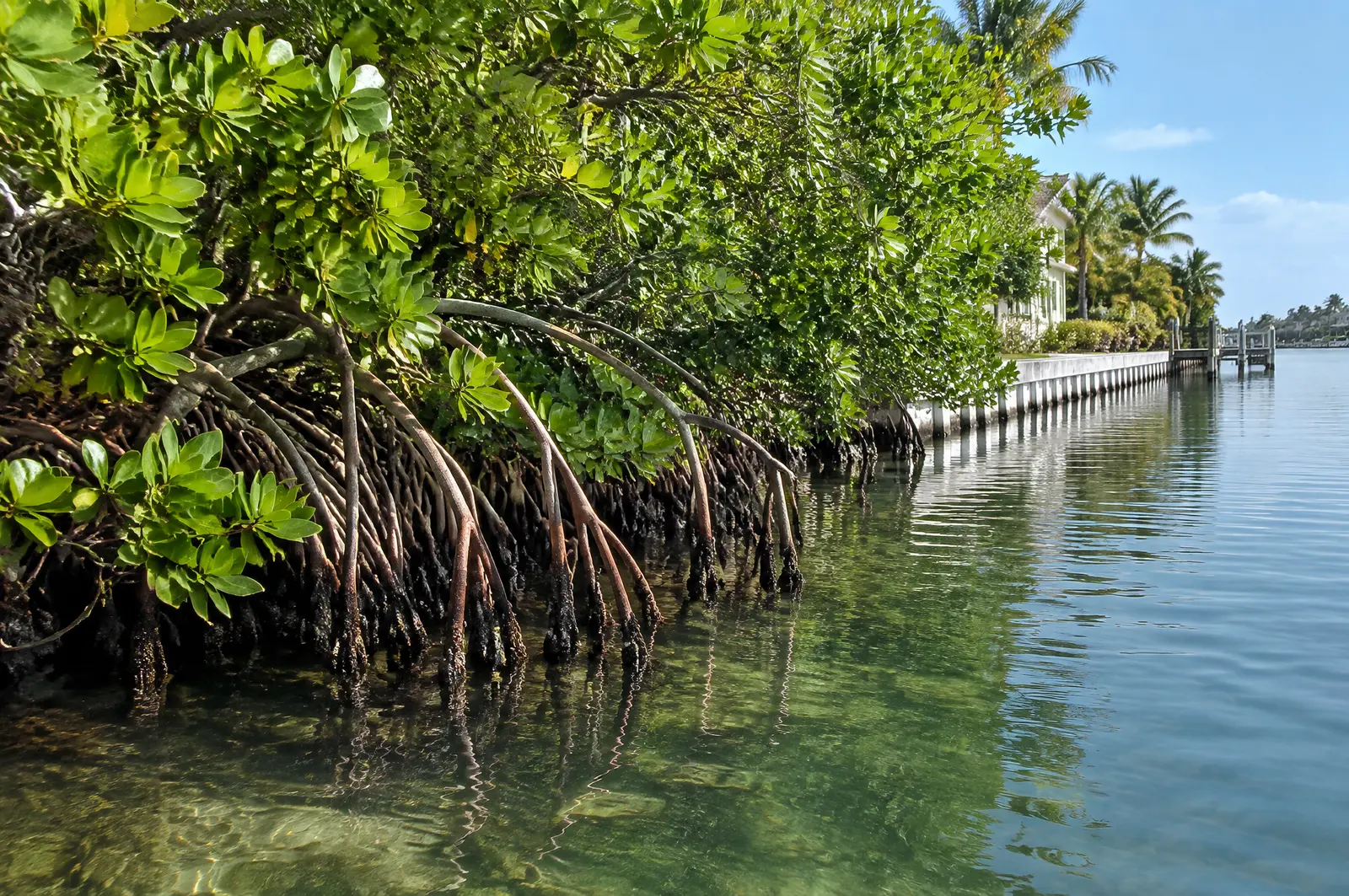
Planting and rock placement stay off existing grass.[2][3][4]
What makes Miami waterfront work different
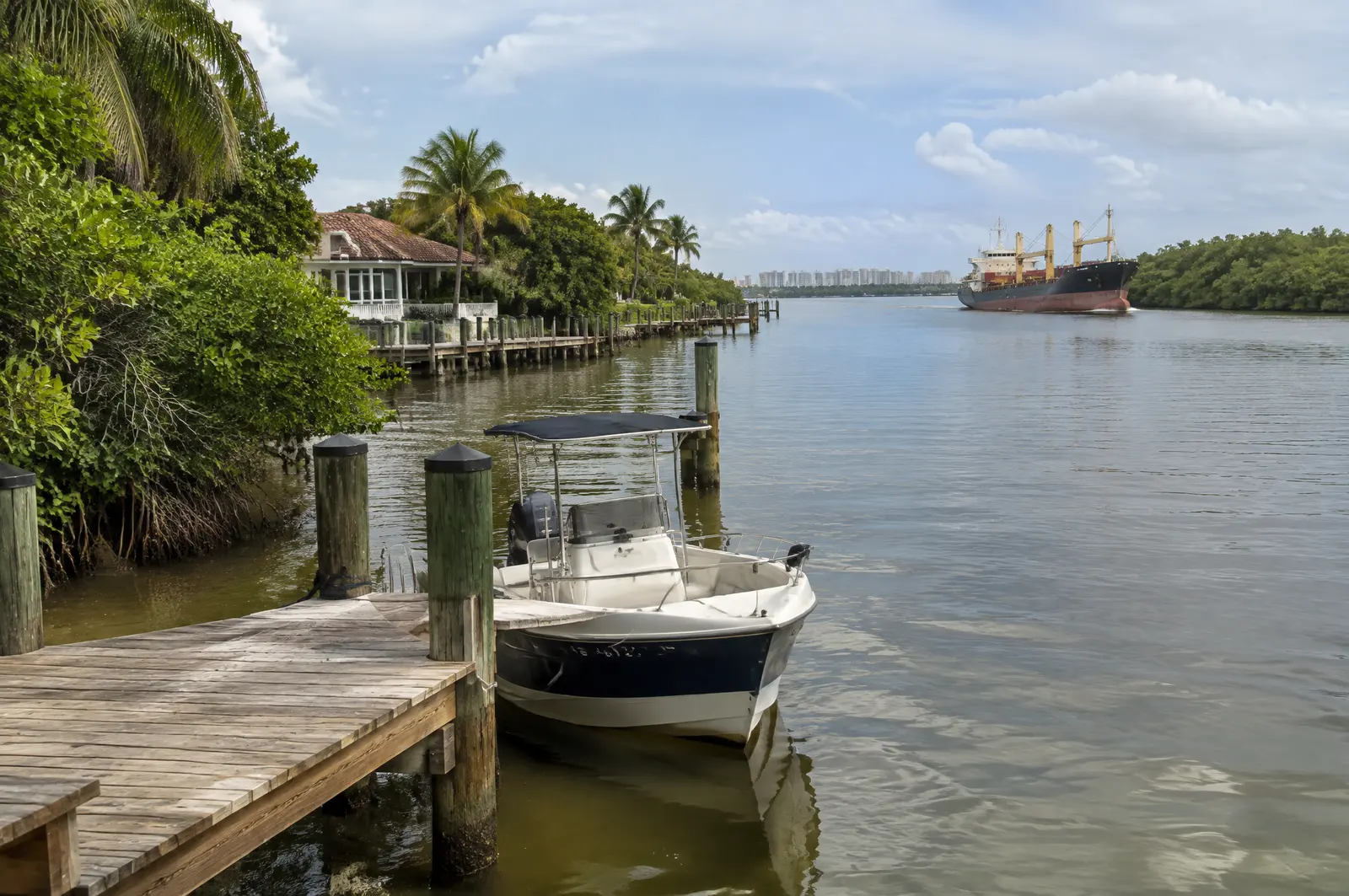
Most of Biscayne Bay and its natural tributaries, including the Miami River and Little River, are state-owned submerged lands, so docks over them need the state's consent alongside the DERM permit. The Biscayne Bay Aquatic Preserve is listed by DERM as a permitting contact, and FDEP's free online dock self-certification is not available in aquatic preserves. The federal seagrass range used in dock design reaches central Biscayne Bay.[1][4][5]
City of Miami seawall height
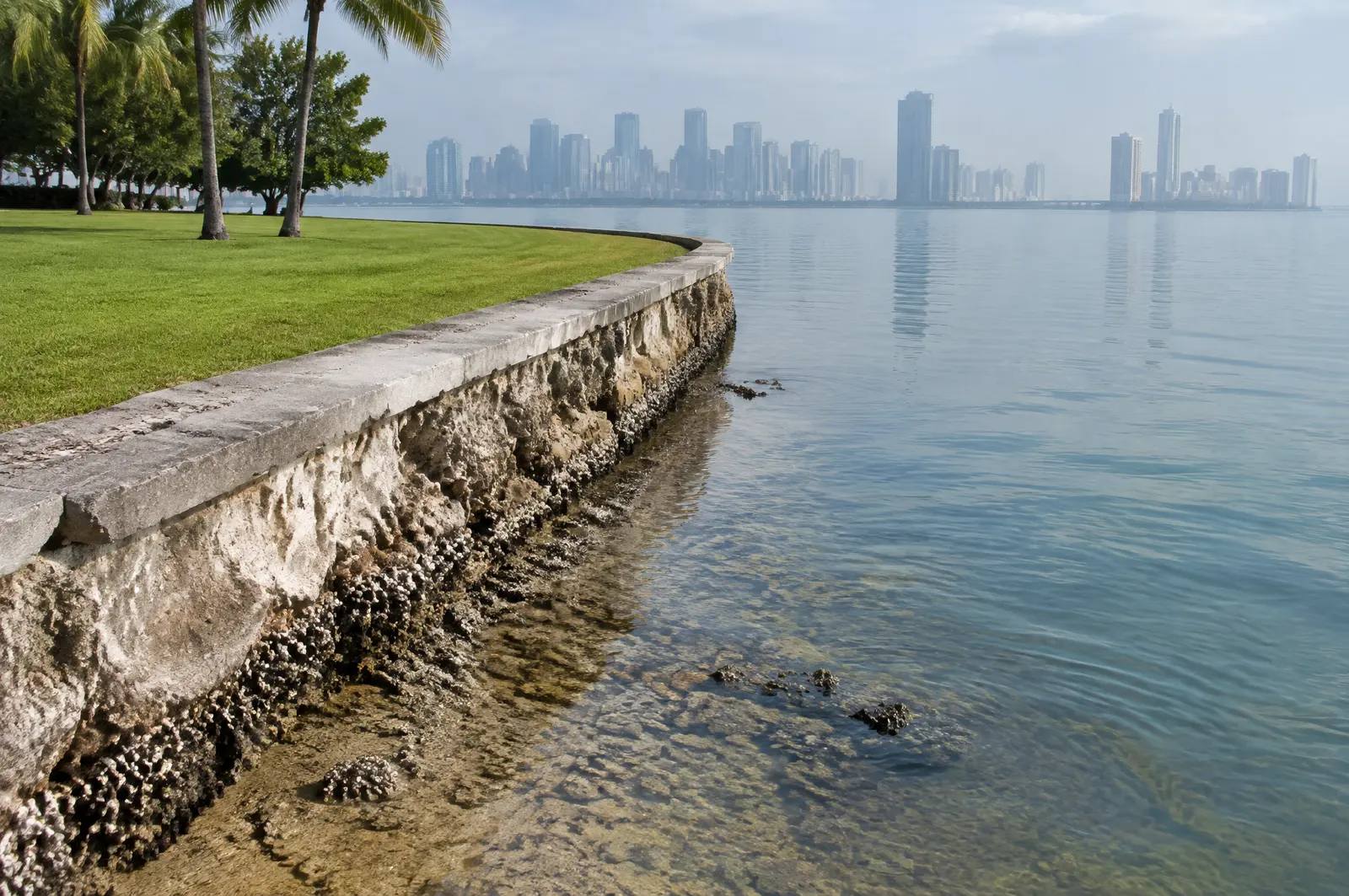
In 2020 the City considered an ordinance (File 7338) to set a 6 ft NAVD 88 minimum for new and rebuilt seawalls east of US-1, outside the Miami River. We have not confirmed that it was adopted, so for every Miami seawall job we confirm the current height rule with the City before design.[6]
Permits in Miami
- Miami-Dade DERM, Coastal Resources Section: Class I permit for any work in, on or over tidal water, the Miami River included, with exempt, expedited and short-form routes for small jobs. Phone (305) 372-6575.
- City of Miami Building Department: Structural and zoning approval for seawalls, docks and lifts inside city limits.
- Florida DEP or South Florida Water Management District: State permit or exemption, and consent to use the state-owned bottom of Biscayne Bay, the Miami River and Little River, which DERM grants for most of the bay on the state's behalf.
- US Army Corps of Engineers, Jacksonville District: Federal sign-off for work in the bay and the river. SPGP VI, the small-project route, passed its stated 27 July 2026 expiry, so we confirm the current route for each job.
Permits for living shorelines
Riprap follows the riprap rules: up to 10 ft waterward under SPGP VI and a state general permit for up to 100 linear feet at 2:1. In Miami-Dade, mangrove permits are valid for 3 years and limerock boulder riprap on a 2:1 slope gets an expedited authorisation after a DERM inspection.[5][1]
Frequently asked questions
Do I need a permit to put rocks in front of my seawall in Miami?
Rock placed under an undercut wall no more than 2 ft out is exempt. A riprap apron up to 10 ft out on a 2:1 slope is expedited after a DERM inspection costing $170.
Is a dock on Biscayne Bay in Miami treated differently from one on a canal?
Yes. The bay is an aquatic preserve and Outstanding Florida Waters, so the state exemption allows 500 sq ft over the water there, compared with 1,000 sq ft on an artificial canal, and FDEP's free online self-certification is not available.
Sources
- Class I Permit Application for Coastal Construction and Mangrove Trimming within Miami-Dade County (Revised May 2025), Miami-Dade County RER, Division of Environmental Resources Management (DERM), Coastal Resources Section. Accessed October 27, 2026.
- Biscayne Bay Aquatic Preserve, Florida Department of Environmental Protection, Office of Resilience and Coastal Protection. Accessed October 28, 2026.
- Florida Statutes 2026, Section 403.813: Permits issued at district centers; exceptions, The Florida Legislature (Online Sunshine). Accessed October 27, 2026.
- Dock Permitting in Florida: Permit Application Fee Schedule and Aquatic Preserve Design Criteria, Florida Department of Environmental Protection (FDEP). Accessed October 27, 2026.
- Department of the Army State Programmatic General Permit VI (SPGP VI), SAJ-2015-2575, State of Florida, U.S. Army Corps of Engineers, Jacksonville District (document hosted by Florida DEP). Accessed October 27, 2026.
- City of Miami File ID 7338 (Revision A): Ordinance amending Chapters 20, 29 and 54 to set seawall minimum heights (Second Reading, printed 5/19/2020), City of Miami. Accessed October 27, 2026.
- Letter to the Miami City Manager on Community Rating System verification (12 May 2022), with CRS verification report, FEMA, Federal Insurance and Mitigation Administration (hosted by the City of Miami). Accessed October 28, 2026.
- Solar, Open Air Dining, and Other Permits, City of Coral Gables. Accessed October 27, 2026.
Get a free quote
Tell us about your project and we will get back to you fast.