
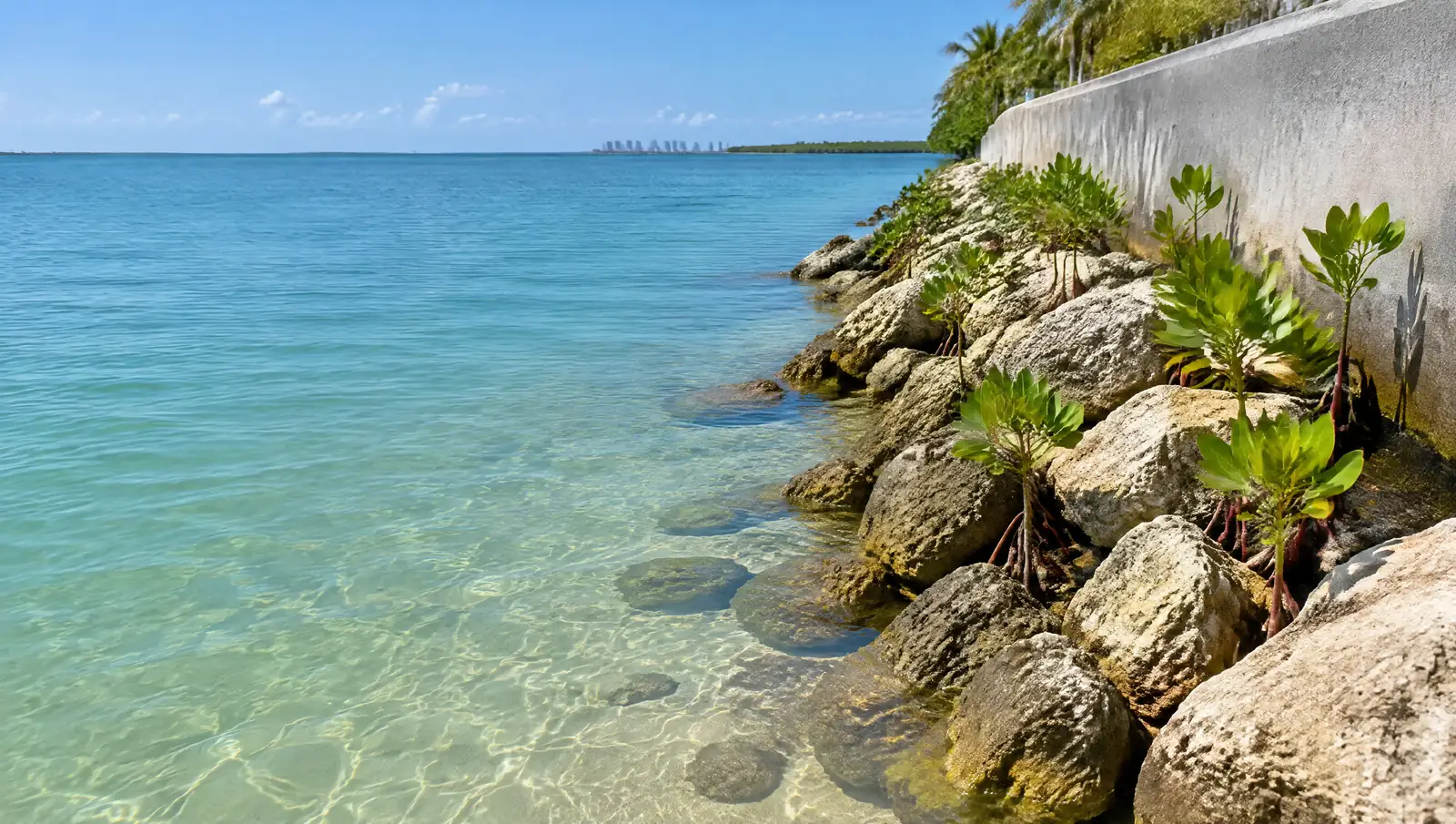
Riprap and toe protection in Coral Gables
Riprap and toe protection in Coral Gables, where living seawalls earn a 20% cut in permit fees.
Free Fast Quote
Please fill out this form to request a free quote on your upcoming project and we will respond to you right away!
When water scours under the toe of a wall, the wall starts to tip. Riprap and toe repairs stop that, and some are permit-exempt in Miami-Dade.
- Free, no-obligation quote
- Fast response from our team
- Miami-Dade, Broward, Palm Beach and the Keys
The short answer
Coral Gables gives a 20% permit fee cut to living seawalls built with pH-neutral cement or retrofit panels (Resolution 2025-342). Coral Gables protects its canals under City Code 86-3 because they carry floodwater away from homes.
Last updated
Signs the toe needs work
Look for these at low tide.
- A gap or hollow under the base of the wall
- Wall tipping toward the water
- Soil loss behind the wall with no visible crack
- Strong wakes or currents along the lot
Typical project sizes
Toe repairs often cover the worst few sections of wall; riprap revetments usually run the full frontage. The state general permit covers up to 100 linear feet of riprap at a slope no steeper than 2:1.
Fee breaks for living seawalls
Under Resolution 2025-342, Coral Gables cuts city permit fees by 20% for living seawalls that use pH-neutral cement or modular retrofit panels, and waives fees for existing homes making seawall improvements to address sea level rise.
Riprap is one of the few shoreline jobs that can stay on a simpler permit when it is sized to that limit.[1]
Canals are part of the drainage
The City describes its canals as a drainage feature that carries floodwater away and protects them under City Code 86-3, with illegal dumping reported to the Marine Patrol. Riprap, mangrove trimming and wall work that narrows a canal are reviewed with that drainage role in mind.
Rock is placed around existing mangroves, not over them.[2]
Mangroves on the plans
Coral Gables dock and wall plans must show existing mangroves, and any trimming falls under Miami-Dade's Class I permit for coastal construction and mangrove trimming. DERM's mangrove permits run 3 years, against 2 years for a short-form structure permit, so a job that touches mangroves is scheduled differently.[3][4]
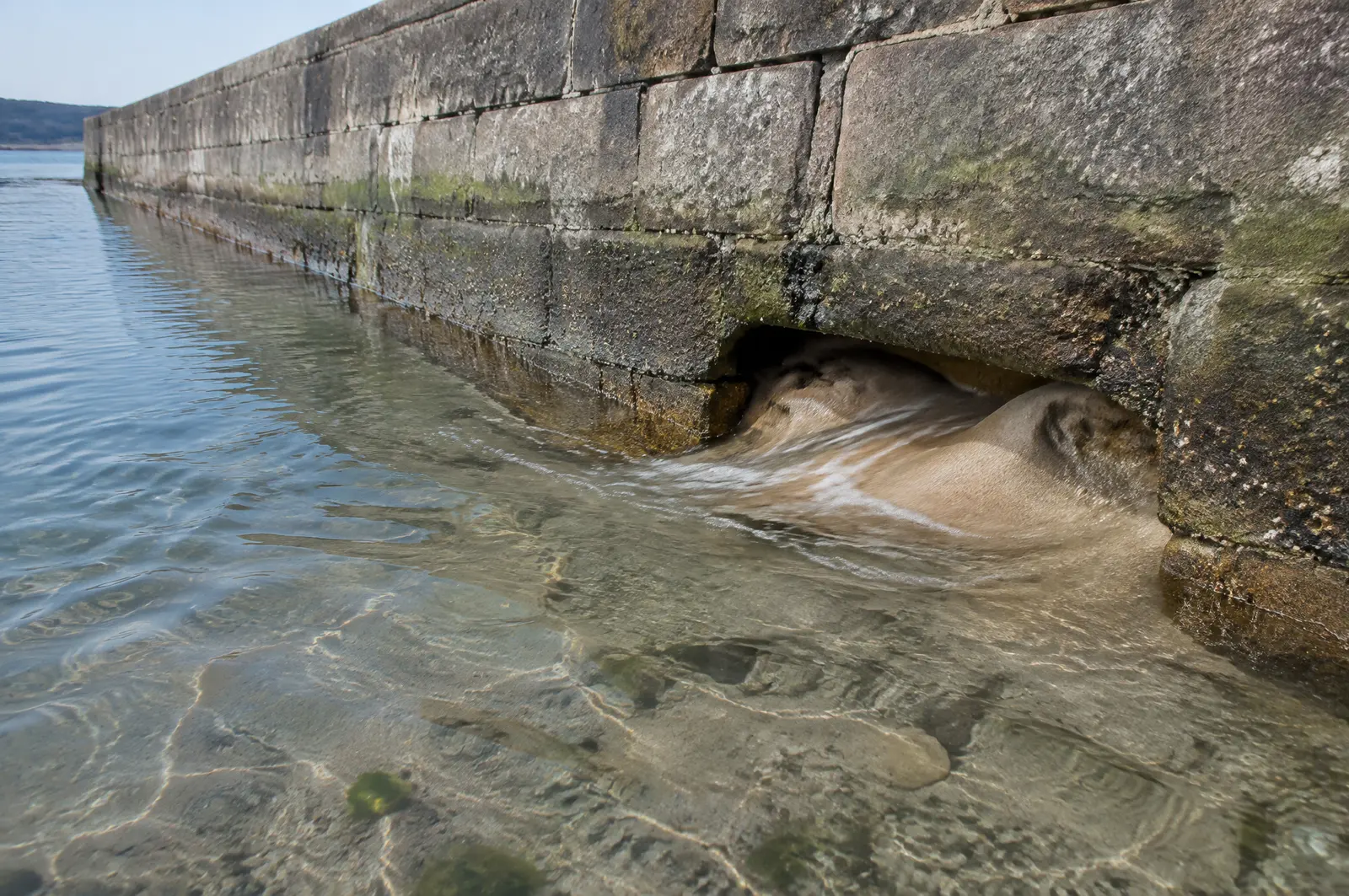
The bay off the Gables is preserve water
The Biscayne Bay Aquatic Preserve runs the length of the bay outside Biscayne National Park, and its access list includes the Matheson Hammock Park boat ramp beside the Gables bayfront. Bay-facing docks there fall under the 500 sq ft Outstanding Florida Waters exemption and the preserve's seagrass protection, while Miami-Dade manatee zones (rule 68C-22.025) govern boat speeds.
Rock footprints are kept off grass beds, so a survey of the bottom comes before the rock order.[5][6][7]
What makes Coral Gables different
Dock, mooring and wharf plans must show dimensions across the waterway, existing mangroves and the installation method, and carry DERM's preliminary approval; revised plans need a DERM stamp again. Properties in Cocoplum Section II must include a copy of the Cocoplum dock plan. The City also asks for a notarised Public Works permit application, colour photos of existing conditions and a survey.[3]
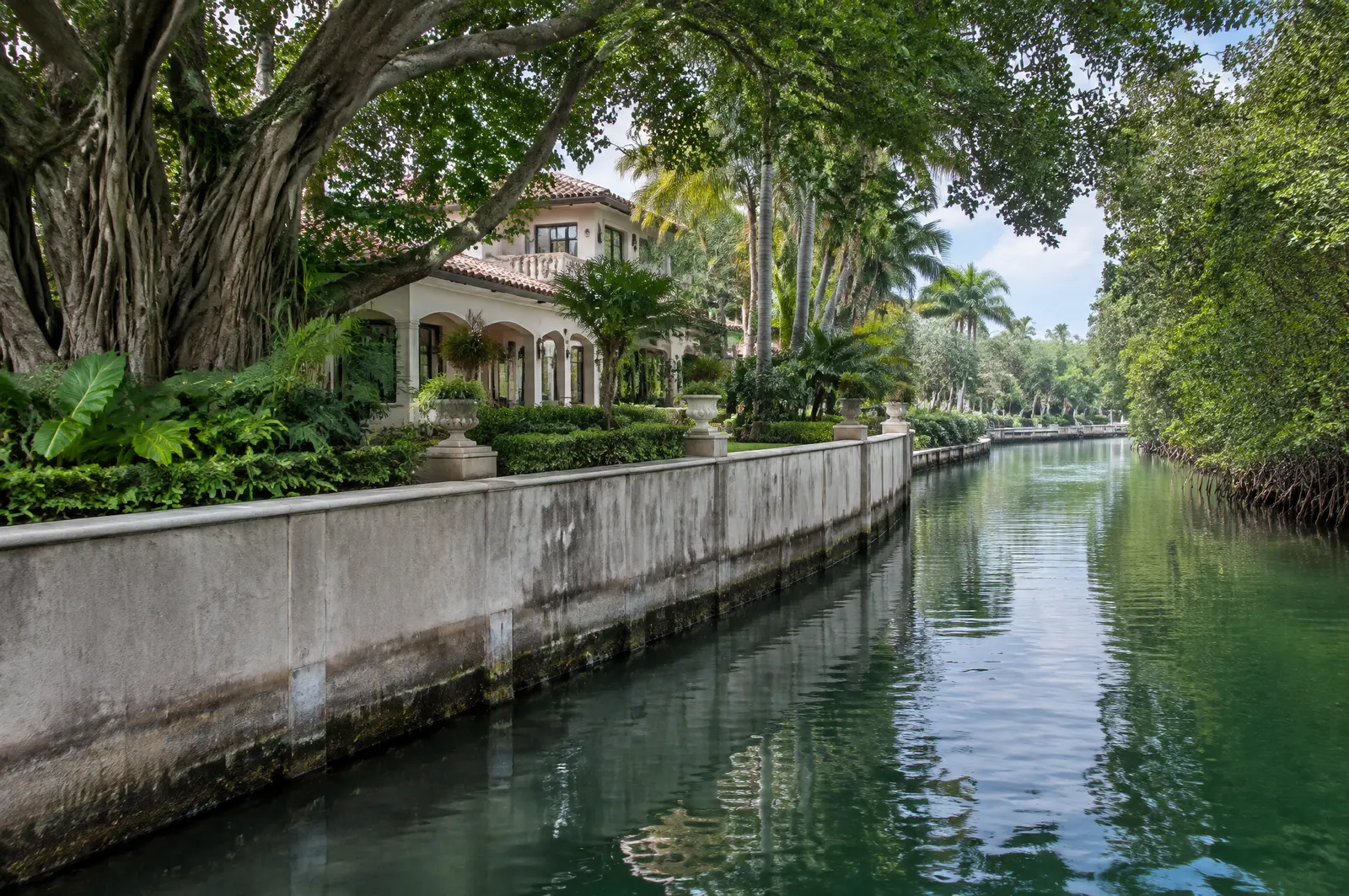
Fee incentives
Under Resolution 2025-342, living seawalls with pH-neutral cement or modular retrofit panels qualify for a 20% reduction in city permit fees, and a separate fee waiver applies to existing homes making seawall improvements to address sea level rise.[1]
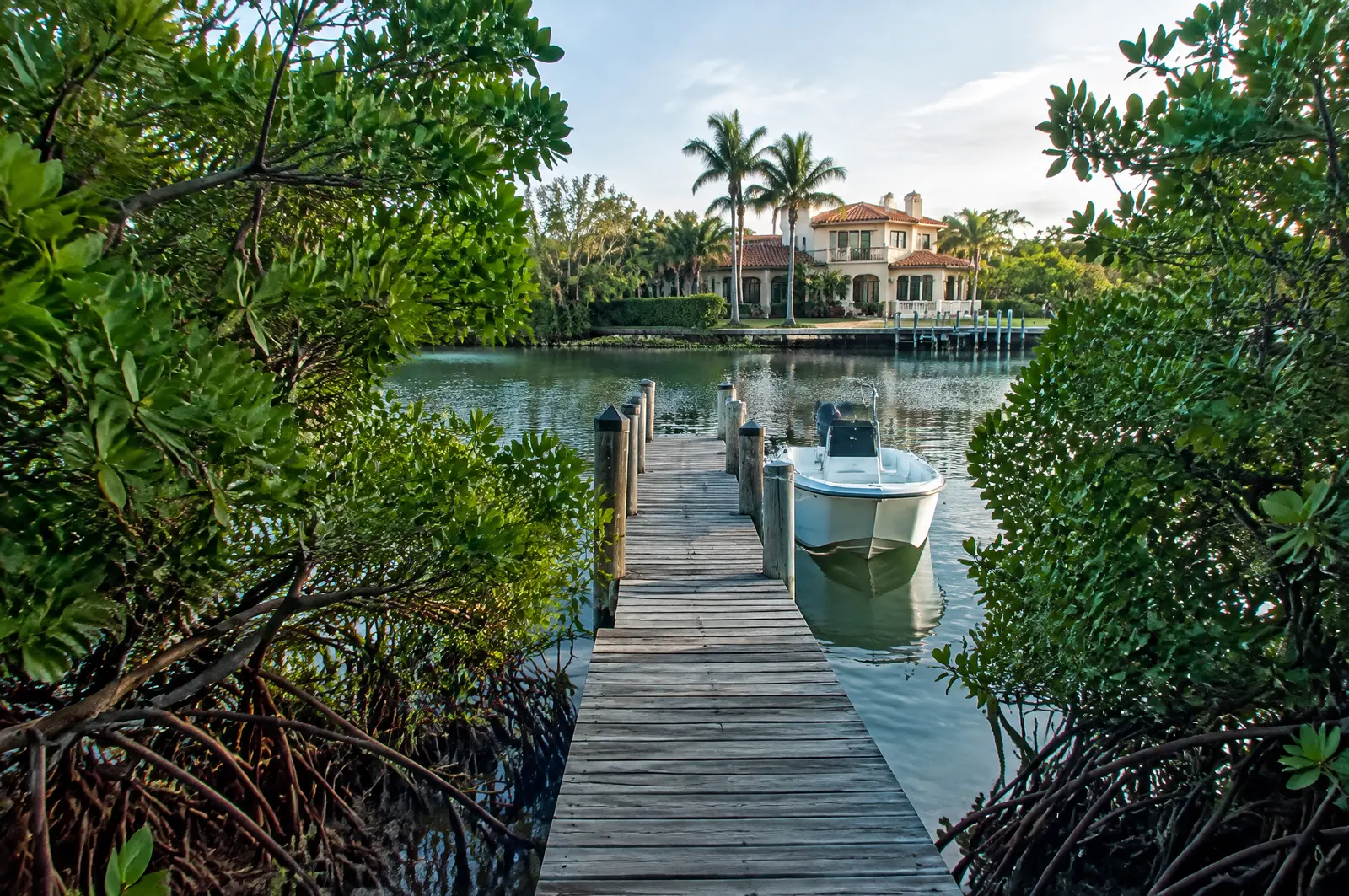
Permits in Coral Gables
- Miami-Dade DERM, Coastal Resources Section: Class I permit, plus the preliminary approval the City asks to see before it looks at any dock or wall plans. Phone (305) 372-6575.
- City of Coral Gables Development Services and Public Works: Building and Public Works permits for seawalls, bulkheads and docks, after DERM preliminary approval.
- Florida DEP or South Florida Water Management District: State permit or exemption for docks and walls on the Gables canals and the bay, where aquatic preserve rules apply to open bay frontage.
- US Army Corps of Engineers, Jacksonville District: Federal authorisation for bayfront and canal work, confirmed for each job since SPGP VI's stated July 2026 expiry.
What riprap does
Riprap is a sloped layer of large rock at the base of a seawall. It breaks wave energy and stops the water from scouring sand out from under the toe. Red mangroves can grow between the rocks, which is the idea behind living shorelines.
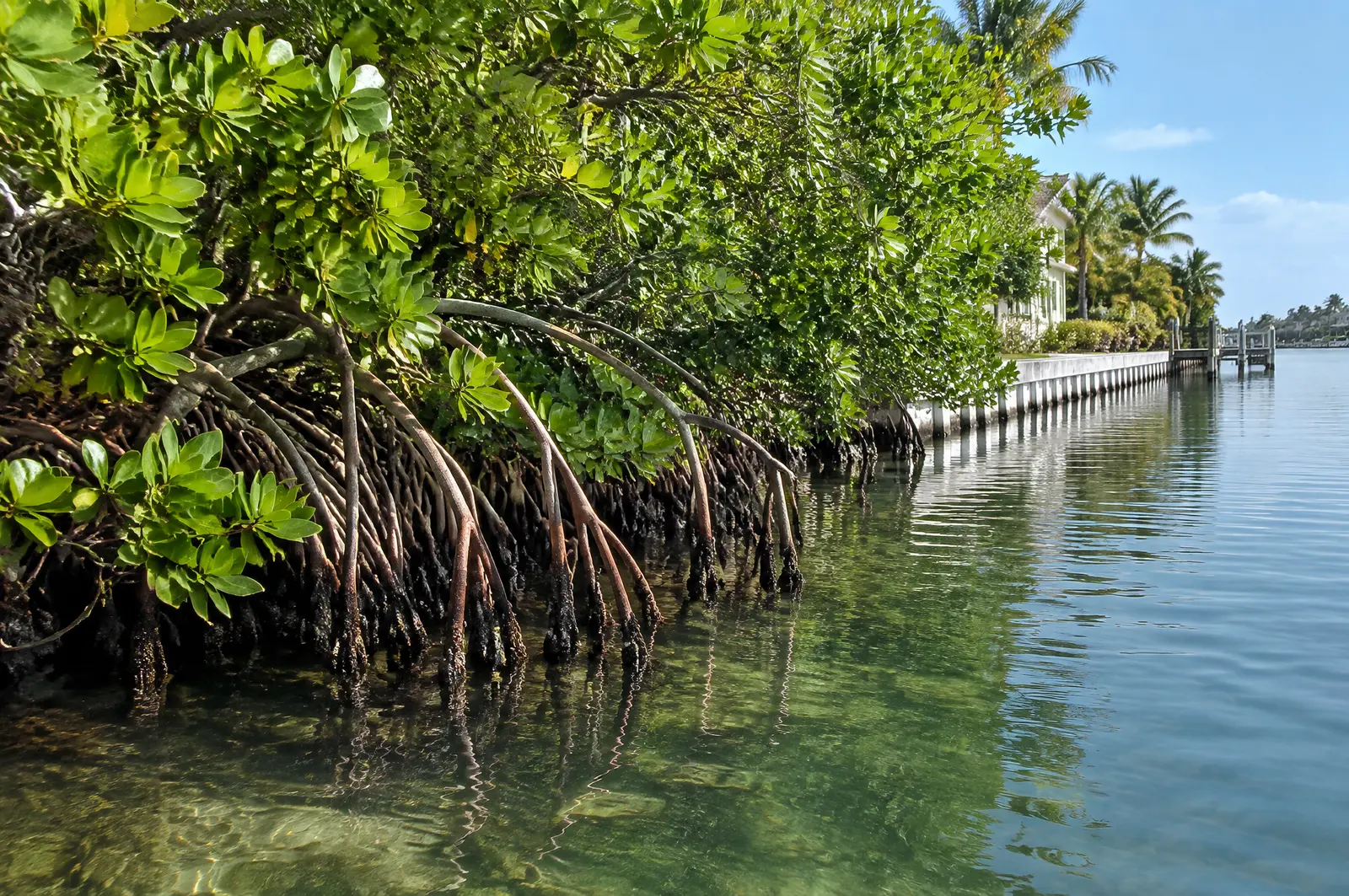
Riprap limits and permits
Under SPGP VI, new riprap may extend no more than 10 ft waterward of the mean high water line, and repair or replacement no more than 18 inches beyond the previous footprint. Miami-Dade allows natural limerock boulder riprap on a 2:1 slope up to 10 ft waterward through an expedited authorisation after inspection.[11][4]
| Work | Rule | Fee |
|---|---|---|
| Riprap or gunite tube under undercut wall, up to 2 ft waterward | DERM exempt | None from DERM |
| Sand-cement bags at toe, up to 2 ft waterward | DERM exempt | None from DERM |
| Limerock boulder riprap, 2:1 slope, up to 10 ft waterward | DERM expedited after inspection | $170 inspection |
| Up to 100 linear ft of riprap at 2:1 or flatter | State general permit (62-330.431) | Set by FDEP |
Frequently asked questions
Does Coral Gables give any break on seawall permit fees?
Yes. Living seawalls with pH-neutral cement or retrofit panels get 20% off city permit fees, and existing homes improving a seawall for sea level rise can get a fee waiver.
Why does Coral Gables care what goes into its canals?
The canals carry floodwater away, so City Code 86-3 protects them, and the City asks residents to report dumping to the Marine Patrol.
Can I trim mangroves for a dock in Coral Gables?
Only with a Miami-Dade DERM Class I mangrove permit, and the City's dock plans must show the existing mangroves.
Is the bay off Coral Gables protected water?
Yes. It is part of the Biscayne Bay Aquatic Preserve and Outstanding Florida Waters, so dock exemptions are smaller and seagrass is protected.
Sources
- Solar, Open Air Dining, and Other Permits, City of Coral Gables. Accessed October 27, 2026.
- Flood Management Brochure, City of Coral Gables, Development Services. Accessed October 28, 2026.
- Permit Requirements for Development Services (rev. 07.22.2026), section Docks/Moorings/Wharves, City of Coral Gables Development Services Department. Accessed October 27, 2026.
- Class I Permit Application for Coastal Construction and Mangrove Trimming within Miami-Dade County (Revised May 2025), Miami-Dade County RER, Division of Environmental Resources Management (DERM), Coastal Resources Section. Accessed October 27, 2026.
- Biscayne Bay Aquatic Preserve, Florida Department of Environmental Protection, Office of Resilience and Coastal Protection. Accessed October 28, 2026.
- Florida Statutes 2026, Section 403.813: Permits issued at district centers; exceptions, The Florida Legislature (Online Sunshine). Accessed October 27, 2026.
- Manatee Data and Maps (county manatee protection zone and boating restricted area maps), Florida Fish and Wildlife Conservation Commission (FWC). Accessed October 28, 2026.
- CAO 2022-007: Legal Opinion Regarding Scrivener's Error in Zoning Code 3-706 Bulkheads and Retaining Walls (17 Aug 2022), City of Coral Gables, City Attorney. Accessed October 27, 2026.
- Datums for station 8723289, Cutler, Biscayne Bay (tidal epoch 1983 to 2001), NOAA Center for Operational Oceanographic Products and Services (CO-OPS), Tides and Currents. Accessed October 28, 2026.
- Datums for station 8723170, Miami Harbor Entrance (tidal epoch 1983 to 2001), NOAA Center for Operational Oceanographic Products and Services (CO-OPS), Tides and Currents. Accessed October 28, 2026.
- Department of the Army State Programmatic General Permit VI (SPGP VI), SAJ-2015-2575, State of Florida, U.S. Army Corps of Engineers, Jacksonville District (document hosted by Florida DEP). Accessed October 27, 2026.
Get a free quote
Tell us about your project and we will get back to you fast.